

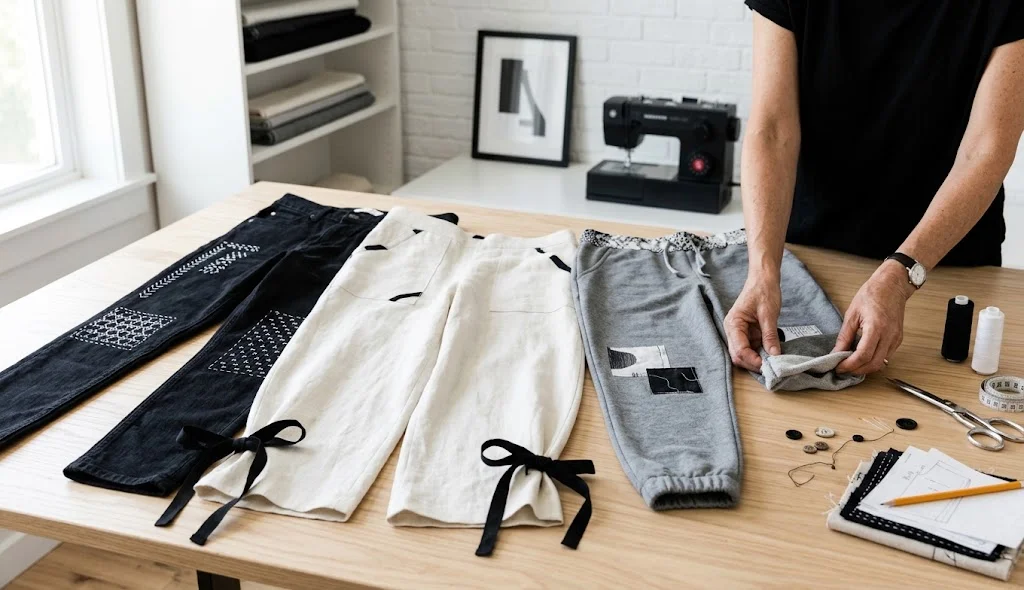
DIY pants are a practical and creative way to refresh your wardrobe, customize old clothing, and experiment with different fabrics and styles. Whether you want to sew pants from scratch, transform old jeans, or create comfortable lounge pants, there are plenty of DIY pants ideas for beginners and experienced sewing enthusiasts.
With basic sewing supplies, a suitable pattern, and some fabric, you can make pants that fit your style and preferences. Upcycling old jeans, trousers, or oversized clothing can also turn unused garments into something useful and fashionable.
Why Try DIY Pants Projects?
Making your own pants has several advantages:
- Budget-friendly: Create clothing using affordable fabric or old garments.
- Customizable: Choose the fabric, color, fit, length, and details.
- Sustainable: Upcycle jeans, trousers, and leftover fabric.
- Creative: Experiment with pockets, waistbands, hems, and patterns.
- Practical: Make comfortable pants for everyday wear, lounging, or outdoor activities.
- Skill-building: Improve your sewing and clothing-making abilities.
10 Easy DIY Pants Methods
1. DIY Wide-Leg Pants
Wide-leg pants are comfortable and relatively simple to customize. Choose a lightweight or medium-weight fabric and use a suitable wide-leg pattern.
Add an elastic waistband for an easier beginner-friendly design.
Best for: Casual outfits, summer clothing, and comfortable everyday wear.
2. DIY Pajama Pants
Pajama pants are an excellent sewing project for beginners. Use soft cotton or another comfortable fabric and create a simple elastic waistband.
You can also add side pockets for extra practicality.
Best for: Sleepwear, lounging, and beginner sewing projects.
3. DIY Palazzo Pants
Palazzo pants have a wide, flowing silhouette. Choose lightweight fabric that drapes well and use a suitable pattern to create the wide legs.
An elastic waistband can make the project easier and more comfortable.
Best for: Summer outfits, casual fashion, and relaxed styles.
4. DIY Jogger Pants
Create comfortable joggers using sweatshirt fleece, jersey, or another suitable knit fabric. Add an elastic waistband and cuffs around the ankles.
Side pockets can make the finished pants more practical.
Best for: Casual wear, home outfits, and active lifestyles.
5. DIY Cargo Pants
Cargo pants can be customized with multiple practical pockets. Start with a suitable pants pattern and add pocket panels to the sides.
Use durable cotton or another medium-weight fabric for a structured appearance.
Best for: Casual outfits and utility-inspired fashion.
6. DIY Jeans Makeover
Give an old pair of jeans a new appearance instead of throwing them away. You can shorten the legs, add patches, change the hem, or transform the jeans into a different style.
For more advanced projects, old jeans can also be used as fabric for new clothing or accessories.
Best for: Upcycling and sustainable fashion.
7. DIY Culotte Pants
Culottes combine a wide-leg silhouette with a shorter length. Choose a fabric with good drape and use a suitable pattern.
Experiment with different lengths to create a style that works with your wardrobe.
Best for: Casual and semi-formal outfits.
8. DIY Linen Pants
Linen and linen-blend fabrics are popular for comfortable warm-weather pants. Create a relaxed silhouette with an elastic or drawstring waistband.
Pre-treat the fabric according to its care instructions before cutting to help account for potential shrinkage.
Best for: Summer outfits and breathable everyday clothing.
9. DIY Drawstring Pants
Drawstring pants are simple and comfortable. Create a relaxed leg shape and add a waistband with a channel for the drawstring.
Use a suitable cord and secure the ends properly.
Best for: Lounge clothing, casual outfits, and lightweight summer pants.
10. DIY Shorts From Old Pants
Turn old jeans or trousers into shorts by measuring and cutting the legs at your preferred length.
Finish the raw edges with a hem or another appropriate method. Add decorative stitching, patches, or a cuff if desired.
Best for: Upcycling old clothing and summer fashion.
Basic Materials for DIY Pants
Depending on your project, you may need:
- Fabric
- Old jeans or trousers for upcycling
- Pants pattern
- Sewing machine or needle and thread
- Fabric scissors
- Measuring tape
- Sewing pins or clips
- Fabric chalk or washable marker
- Ruler
- Iron
- Seam ripper
- Elastic
- Drawstring cord
- Buttons
- Zippers
- Interfacing
- Matching thread
How to Make Simple DIY Elastic-Waist Pants
Elastic-waist pants are a practical starting point for beginners.
Step 1: Take Your Measurements
Measure your waist, hips, desired pants length, and leg width. Use these measurements when selecting or adjusting a suitable pattern.
Step 2: Choose the Fabric
Select a fabric that matches the intended style. Cotton, linen blends, and suitable knit fabrics can work well depending on the pattern.
Step 3: Prepare the Pattern
Use a properly drafted pants pattern that matches your measurements. Check the pattern instructions for seam allowances and fabric requirements.
Step 4: Cut the Fabric
Lay the fabric flat and cut the required pieces carefully. Pay attention to the grain direction and any pattern placement.
Step 5: Sew the Legs
Join the appropriate front and back pieces according to the pattern instructions. Press seams as you work.
Step 6: Assemble the Pants
Sew the leg sections together and create the main pants shape. Check the fit before completing the waistband and hem.
Step 7: Add the Waistband
Create a waistband channel and insert elastic that provides a comfortable fit without being too tight.
Step 8: Finish the Hem
Fold and sew the bottom edges of the pant legs to create a neat hem.
Step 9: Check the Fit
Try the pants on and make any necessary adjustments before completing the final finishing touches.
DIY Pants Safety Tips
Sewing projects involve sharp tools and equipment, so basic safety is important:
- Use scissors, pins, needles, and other sewing tools carefully.
- Keep pins and needles in a secure container when not in use.
- Children should have adult supervision when using sewing machines or sharp tools.
- Unplug the sewing machine before changing the needle or performing maintenance.
- Follow the manufacturer’s instructions for your sewing machine.
- Keep loose fabric away from moving sewing-machine parts.
- Test fabric dyes, paints, or other treatments on a small area first.
How to Make DIY Pants Look Professional
Accurate measurements and careful cutting can make a major difference in the finished garment. Always check the fit before completing the waistband, hems, or other permanent details.
Press seams regularly while sewing to keep the fabric flat. Use thread and needles appropriate for your fabric, and finish raw edges neatly to help prevent fraying.
For a more polished appearance, pay attention to details such as pocket placement, waistband construction, stitching, and hem length.
DIY Pants Ideas for Beginners
If you are new to sewing clothes, start with simple styles such as:
- Elastic-waist pajama pants
- Loose wide-leg pants
- Drawstring pants
- Simple linen pants
- Basic lounge pants
- Shorts made from old trousers
Once you are comfortable with basic construction, you can try more advanced designs such as cargo pants, fitted trousers, jeans, or pants with zippers and tailored waistbands.
DIY Pants Upcycling Ideas
Old clothing can provide excellent material for creative DIY projects. Instead of throwing away worn or unused pants, consider:
- Turning old jeans into shorts
- Adding fabric patches
- Changing the hem
- Adding decorative embroidery
- Creating cropped pants
- Combining fabric panels
- Reusing denim for accessories
Upcycling is a simple way to reduce textile waste while giving old clothing a new purpose.
Final Thoughts
DIY pants are a useful and creative sewing project for anyone who wants to customize their wardrobe. From comfortable pajama pants and joggers to wide-leg pants, cargo pants, culottes, and upcycled jeans, there are many styles to explore.
Start with an easy elastic-waist design, practice accurate cutting and sewing, and gradually experiment with more advanced patterns. With patience and creativity, you can make DIY pants that are comfortable, practical, and uniquely your own.