

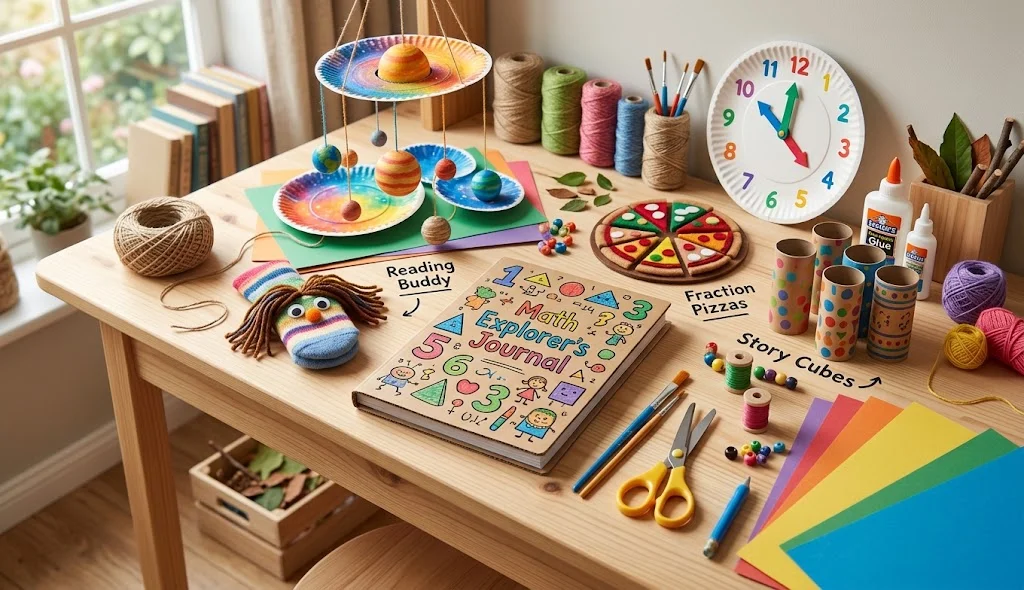
DIY 2nd grade crafts are a fun way to combine creativity with everyday learning. Children in second grade can enjoy making simple projects that help them explore numbers, letters, stories, nature, science, and imaginative play.
With basic supplies such as paper, cardboard, crayons, craft sticks, yarn, glue, and recycled materials, kids can turn ordinary items into creative learning projects. These crafts can be used at home, for classroom activities, or as enjoyable weekend projects.
In this guide, you will find easy DIY 2nd grade crafts that are designed around learning and creativity while remaining simple enough for young students to enjoy.
Why Try DIY 2nd Grade Crafts?
Crafting can make learning more interactive and enjoyable for children. Instead of only reading or writing about a topic, kids can create something connected to what they are learning.
DIY crafts for second graders can help encourage:
- Creativity and imagination
- Fine motor coordination
- Basic problem-solving
- Following instructions
- Independent thinking
- Storytelling skills
- Interest in science and nature
- Confidence through completing projects
The best projects allow children to make their own choices while still connecting the activity to a useful learning concept.
10 DIY 2nd Grade Crafts Methods
1. DIY Storytelling Spinner
Create a simple spinner that helps children build their own stories.
Materials:
- Cardstock
- Pencil
- Ruler
- Markers
- Scissors
- Paper fastener
- Small piece of cardboard
Method:
- Cut a large circle from cardstock.
- Divide the circle into several sections.
- Label sections with characters, places, objects, and actions.
- Create a small arrow from cardboard.
- Attach the arrow to the center with a paper fastener.
- Spin the arrow and choose the elements it lands on.
- Use those elements to create a short story.
This craft turns creative writing into an interactive activity.
Best for: English, storytelling, and creative writing.
2. DIY Place Value House
Make a colorful paper house to practice understanding numbers and place values.
Materials:
- Cardstock
- Colored paper
- Glue
- Scissors
- Markers
- Ruler
Method:
- Draw a simple house shape on cardstock.
- Divide the house into sections for ones, tens, and hundreds.
- Write each place-value label in its section.
- Cut small paper number cards.
- Write different numbers on the cards.
- Place the digits in the correct sections.
- Create different numbers and practice reading them aloud.
Best for: Second-grade math and number practice.
3. DIY Life Cycle Flip Book
Create a small flip book to show the stages of a life cycle.
Materials:
- Small sheets of paper
- Cardstock
- Stapler
- Crayons or colored pencils
- Markers
Method:
- Choose a simple topic such as a butterfly, frog, or plant.
- Divide the paper into several pages.
- Draw one stage on each page.
- Add a short label below every drawing.
- Arrange the pages in the correct order.
- Add a cardstock cover.
- Staple the pages together along one side.
- Flip through the pages to review the stages.
Best for: Science lessons and nature topics.
4. DIY Shape Character Craft
Turn basic geometric shapes into a funny character.
Materials:
- Colored paper
- Scissors
- Glue
- Markers
- Googly eyes
- Cardstock
Method:
- Cut circles, squares, triangles, rectangles, and other simple shapes.
- Arrange the shapes into a character.
- Glue the shapes onto cardstock.
- Add eyes, a mouth, hair, or other details.
- Count how many shapes were used.
- Write the names of the shapes beside the character.
Children can create animals, robots, people, or imaginary creatures.
Best for: Geometry and shape recognition.
5. DIY Paper Weather Dial
Make a rotating weather dial that children can use to identify different weather conditions.
Materials:
- Paper plate or cardstock
- Colored paper
- Markers
- Scissors
- Paper fastener
Method:
- Divide the paper plate into several sections.
- Label each section with a weather condition.
- Draw simple symbols for sunny, cloudy, rainy, windy, and snowy weather.
- Create a small arrow from cardstock.
- Attach the arrow to the center.
- Spin the arrow to select a weather condition.
- Ask the child to describe that type of weather.
Best for: Weather and basic science learning.
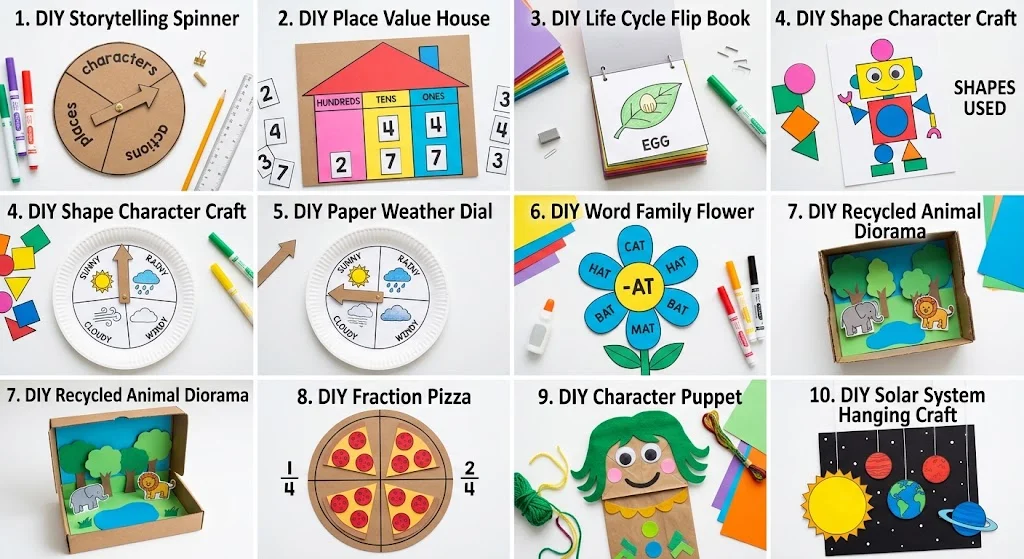
6. DIY Word Family Flower
Create a flower that helps children practice groups of rhyming words.
Materials:
- Colored paper
- Cardstock
- Scissors
- Glue
- Markers
Method:
- Cut a large circle for the center of the flower.
- Write a word ending such as “-at” in the center.
- Cut several petal shapes.
- Write matching words such as cat, hat, bat, and mat on the petals.
- Glue the petals around the center.
- Create additional flowers using different word families.
Best for: Reading, spelling, and phonics practice.
7. DIY Recycled Animal Diorama
Use a small recycled box to create a miniature animal environment.
Materials:
- Small cardboard box
- Colored paper
- Cardboard scraps
- Glue
- Markers
- Cotton
- Leaves or safe natural materials
Method:
- Choose an environment such as a jungle, desert, ocean, or forest.
- Cover the inside of the box with suitable colored paper.
- Create simple animals from paper or cardboard.
- Add trees, rocks, plants, water, or other environmental details.
- Place the animals inside their environment.
- Add small labels describing different parts of the habitat.
Best for: Science, animals, and environmental learning.
8. DIY Fraction Pizza
Turn a paper circle into a simple visual fraction activity.
Materials:
- Cardstock
- Colored paper
- Scissors
- Glue
- Markers
- Ruler
Method:
- Cut a large circle from cardstock.
- Divide the circle into equal sections.
- Cut small colored paper pieces to represent toppings.
- Label the sections with simple fractions such as 1/2, 1/4, or 1/8.
- Add toppings to selected sections.
- Ask the child to identify how much of the pizza is covered.
For example, four equal sections can be used to demonstrate quarters.
Best for: Introductory fractions and visual math practice.
9. DIY Character Puppet
Create a simple paper puppet that can be used for storytelling.
Materials:
- Paper bags or cardstock
- Colored paper
- Glue
- Markers
- Yarn
- Scissors
Method:
- Choose a character such as an animal, superhero, explorer, or storybook character.
- Create the face using colored paper.
- Add eyes, ears, hair, and other details.
- Glue the pieces onto a paper bag or cardstock.
- Add yarn or paper details for hair and clothing.
- Give the character a name.
- Use the puppet to act out a short story.
Best for: Storytelling, speaking practice, and imaginative play.
10. DIY Solar System Hanging Craft
Create a simple hanging solar system using paper planets.
Materials:
- Black cardstock
- Colored paper
- String
- Glue
- Scissors
- Markers
- Paper plate or cardboard
Method:
- Cut circles of different sizes for the planets.
- Color or decorate each planet.
- Create a large dark background from cardstock.
- Arrange the planets in a simple solar-system-inspired layout.
- Attach strings to the planets.
- Hang the planets from a cardboard or paper-plate base.
- Add labels for the planets.
Best for: Space, science, and creative classroom projects.
Materials for DIY 2nd Grade Crafts
You do not need expensive supplies to make most second-grade crafts. Keep a small craft box with materials such as:
- Colored paper
- Cardstock
- Recycled cardboard
- Paper plates
- Paper bags
- Crayons
- Colored pencils
- Markers
- Child-safe scissors
- Glue
- Yarn
- Craft sticks
- Paper fasteners
- Cotton
- Recycled boxes
- Safe natural materials
Reusing cardboard packaging and leftover paper can also make these activities more budget-friendly.
How to Make 2nd Grade Crafts More Educational
A simple craft can become a learning activity by adding a small educational challenge.
For example:
- Ask children to count the materials they use.
- Have them write labels for their projects.
- Ask them to describe their finished craft.
- Add simple math problems to paper projects.
- Use crafts to practice spelling words.
- Ask children to explain a science concept using their project.
- Encourage them to create a short story around their craft.
This approach makes crafting more interactive without making the activity feel like another worksheet.
DIY 2nd Grade Crafts for Different Subjects
Math Crafts
Try the place value house, shape character, or fraction pizza. These projects can help children visualize basic mathematical concepts.
Science Crafts
The life cycle flip book, animal diorama, weather dial, and solar system craft can make science topics more hands-on.
English Crafts
The storytelling spinner, word family flower, and character puppet can encourage reading, vocabulary, speaking, and creative writing.
Art Crafts
Shape characters and recycled dioramas give children opportunities to experiment with colors, textures, shapes, and designs.
Tips for Parents and Teachers
When making DIY crafts with second graders, keep the activity simple enough for children to participate independently where possible.
- Prepare materials before starting.
- Demonstrate difficult steps first.
- Let children choose their own colors and designs.
- Encourage creativity instead of demanding identical results.
- Use child-friendly craft supplies.
- Keep the workspace clean and organized.
- Allow glue and paint to dry completely.
- Ask children questions about what they created.
- Use adult assistance for difficult cutting or other potentially unsafe steps.
Safety Tips for DIY 2nd Grade Crafts
Children should always use age-appropriate materials and work under suitable adult supervision.
Use child-safe scissors whenever possible. Adults should handle craft knives, hot glue, sharp tools, or any material that may cause injury. Small craft pieces should also be used carefully, particularly around younger children.
Keep the workspace clear and clean, and wash hands after using glue, paint, or natural materials.
Final Thoughts
DIY 2nd grade crafts can turn ordinary learning topics into creative hands-on experiences. From storytelling spinners and word family flowers to fraction pizzas, life cycle books, animal habitats, and solar system decorations, children can explore different subjects while making something with their own hands.
The goal is not to make every project perfect. Give second graders room to experiment, make choices, solve small problems, and add their own ideas. With simple materials and a little imagination, learning can become a fun and memorable crafting experience.