

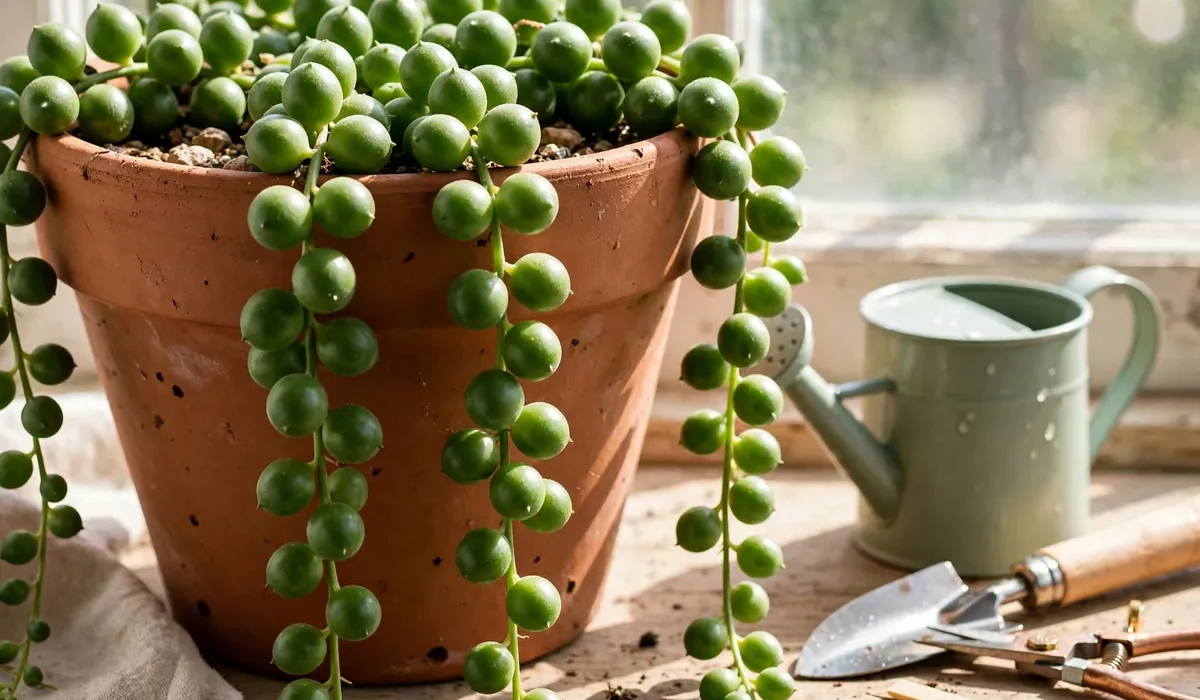
The pearl plant, better known as string of pearls, is one of the most eye-catching houseplants you can grow. Its trailing stems are covered in small, round leaves that look exactly like green pearls, and a healthy plant can cascade two feet or more from its pot. It also has a reputation for being a little fussy. The good news is that pearl plant care is straightforward once you understand what this plant wants. Most problems come from just two mistakes: too much water and too little light.
What Is a Pearl Plant?
The pearl plant is Senecio rowleyanus, a trailing succulent native to southwest Africa. In the wild, it grows along the ground in dry, rocky areas, with its pearl-shaped leaves storing water to survive dry spells. Indoors, it is usually grown in hanging baskets or pots on high shelves, where its stems can trail freely. Each pearl is a modified leaf. The round shape reduces water loss, and a small translucent stripe, called a window, lets light reach the inside of the leaf. That window is a helpful clue: when the plant is thirsty, the pearls wrinkle slightly and the window narrows. When the plant is well hydrated, the pearls look plump and glossy.
Light: The Most Important Factor
Bright light is the single most important part of pearl plant care. The best spot is a bright window with plenty of indirect light. An east-facing window is ideal. A south-facing window works too, as long as the plant is set back slightly or protected from harsh midday sun through glass, which can scorch the pearls.
Light should reach the top of the plant, not just the trailing strands. Many pearl plants fail because the crown sits in shade on a high shelf while only the hanging strands get light. If the top of your plant is thinning, that is often the cause.
Signs of too little light include stretched stems, wide gaps between pearls, and small, pale leaves. Signs of too much direct sun include bleached or brown patches on the pearls.
Watering Your Pearl Plant
Watering is where most pearl plant owners go wrong. Because this plant is a succulent, it stores water in its leaves, so it needs far less water than a typical leafy houseplant. The rule is simple: let the soil dry out completely between waterings, then water thoroughly until it drains from the bottom. In spring and summer, that might mean watering every two to three weeks. In fall and winter, when growth slows, you may water only once a month or even less.
Always check the soil before watering. Slightly wrinkled pearls mean the plant is thirsty, while plump, firm pearls mean it has enough water. Overwatering causes mushy pearls, yellow stems, and root rot. Underwatering is less dangerous, since a thirsty pearl plant recovers quickly once it gets a drink. Always empty the saucer after watering so the pot never sits in standing water.
Soil, Pot, and Feeding
Pearl plants need fast-draining soil. Standard potting mix holds too much moisture, so use a cactus and succulent mix amended with extra drainage material. A good mix is two parts cactus soil, one part perlite, and one part coarse sand. Choose a pot with a drainage hole, and avoid pots much larger than the root ball. A pot that is too big holds extra soil that stays wet too long. Shallow pots work well because pearl plant roots are fairly shallow. Terracotta pots are a great choice because they are porous and help soil dry faster.
Pearl plants are light feeders. In spring and summer, feed once a month with a balanced fertilizer diluted to half strength. Do not fertilize in fall or winter.
Repotting and Propagation
Pearl plants do not need frequent repotting. Repot only when the plant is root-bound or the soil has broken down, usually every two to three years. Handle the plant gently, since strands break easily. Move it into a pot just one size larger, fill in with fresh, fast-draining mix, and wait a few days before watering so any damaged roots can heal.
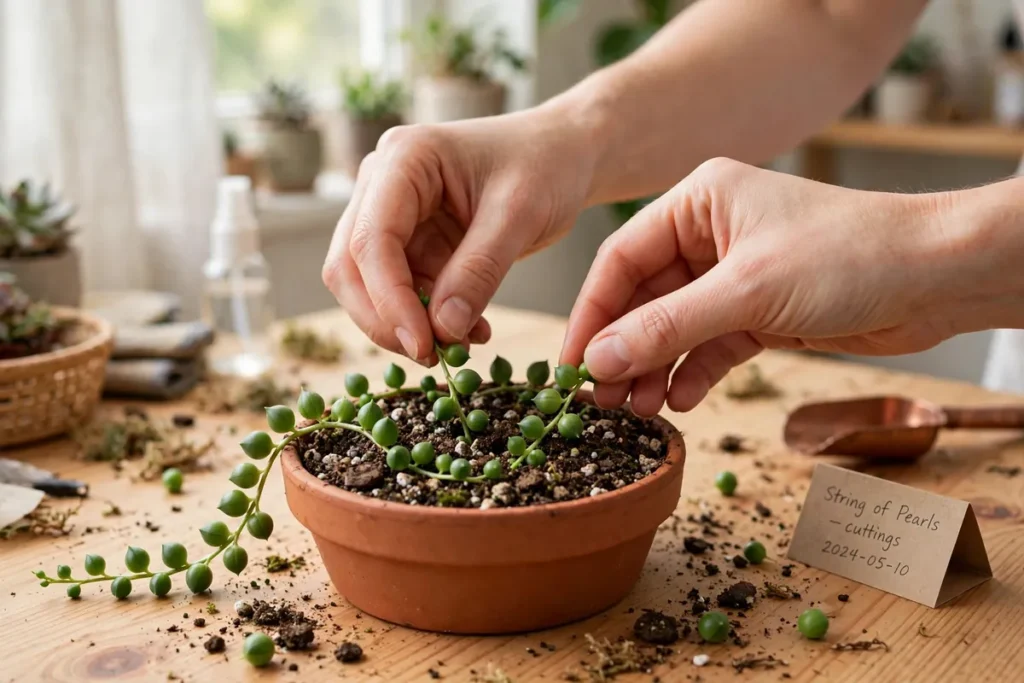
Propagation is the best way to fill in a thin plant or share cuttings. For soil propagation, lay a four to six inch cutting on moist, well-draining soil so several pearls touch the soil. Roots form within two to three weeks. To fill in a thin plant, lay long strands back across the soil surface. The nodes will root where they touch the soil.
Mushy pearls mean overwatering: let the soil dry out and check drainage. A thin crown usually means low light at the top. Watch for mealybugs where pearls meet the stem, and treat early with rubbing alcohol. Pearl plants prefer 65 to 80 degrees Fahrenheit (18 to 27 degrees Celsius) and dislike frost and cold drafts.
Frequently Asked Questions
How often should I water my pearl plant?
Water only when the soil is completely dry, usually every two to three weeks in summer and once a month or less in winter.
Why is my pearl plant dying from the top?
Low light at the top or overwatering is usually the cause. Move the plant so light reaches the soil surface and let the soil dry out.
Can I grow a pearl plant in a hanging basket?
Yes. Hanging baskets let strands trail freely and keep the plant out of reach of pets.
How do I make my pearl plant fuller?
Lay long strands back across the soil so the nodes root, give the plant bright light, and avoid overwatering.
Is the pearl plant toxic to pets?
Yes, it is mildly toxic if eaten. Keep it in a hanging planter or on a high shelf.
Final Thoughts
Pearl plant care comes down to three things: bright light, fast-draining soil, and watering only when the soil is fully dry. Get those right, and your string of pearls will grow into a long, lush curtain of green beads that gets better every year. Pick a bright window, grab a pot with drainage, and enjoy watching those pearl strands trail longer with every season.