

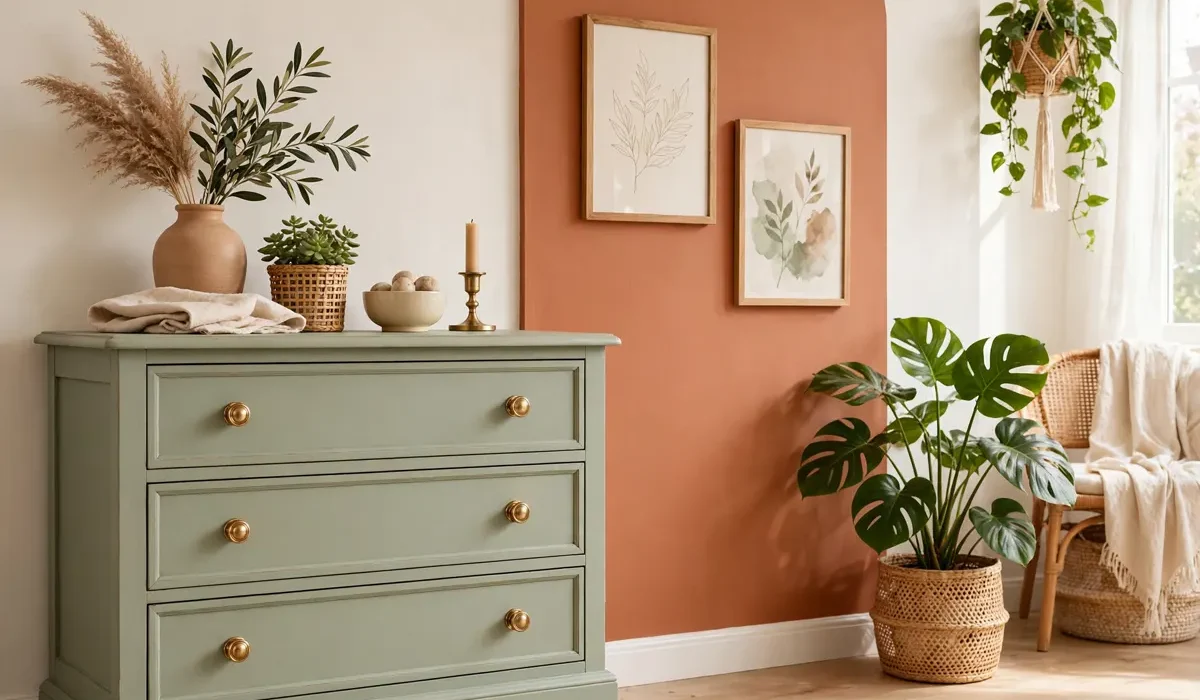
Fresh coat of paint one of fastest, most affordable ways to change how room feels. Do not need full renovation, big budget, or professional skills to get polished result. With right painting DIY ideas for home decor, plain wall, tired dresser, or forgotten corner can become best-looking spot in home. Paint does two jobs at once. Covers wear/outdated color, adds personality. Soft green dresser feels calm/collected. Bold accent wall makes small living room feel designed rather than just furnished. Projects below run from easiest to most ambitious, so can start small, build confidence.
Why Painting Is the Best Budget Upgrade
Paint inexpensive compared with new furniture or new decor. One can can transform several small pieces, one accent wall can change whole mood of room. Painting also lets test style before committing. Most ideas here take afternoon or less, small mistakes can be sanded, touched up, or painted over.
Start With a Simple Plan
Choose one focus area first. Room looks best when one painted feature leads, rest supports it. Decide whether star will be wall, piece of furniture, or group of small accents. Then pick two/three colors already appearing in room, such as cushion, rug, or artwork. Test color in real light before committing. Paint large swatch on poster board, move around room during day. Gather basic supplies first: painter’s tape, drop cloths, angled brush, small roller, paint tray, fine sandpaper, primer, damp cloth.
Easy Painting Ideas for Walls
Paint an Accent Wall
Accent wall simplest wall project with biggest impact. Choose wall naturally drawing eye, often behind sofa, bed, or dining table. Keep other walls neutral so accent color feels intentional. Soft muted colors work well: warm terracotta, sage green, dusty blue, or deep olive. For drama, try rich navy or forest green in room with plenty of natural light.
Try Color Blocking
Color blocking means painting large shape, arch, or rectangle on wall instead of painting whole surface. Painted arch behind bed can look like headboard. Large rectangle behind desk creates focused work zone. Half-painted wall adds color without closing in small room. Use painter’s tape for sharp edges, press down firmly, remove while final coat still slightly tacky.
Add Stripes or a Border
Stripes add pattern without wallpaper. Wide horizontal stripes make room feel longer, while vertical stripes make ceiling feel higher. Keep contrast gentle for calm look, or bold for playful room. For simpler version, paint one thin border near ceiling or along hallway to make plain walls feel finished.
Painting Ideas for Furniture
Refresh a Dresser or Side Table
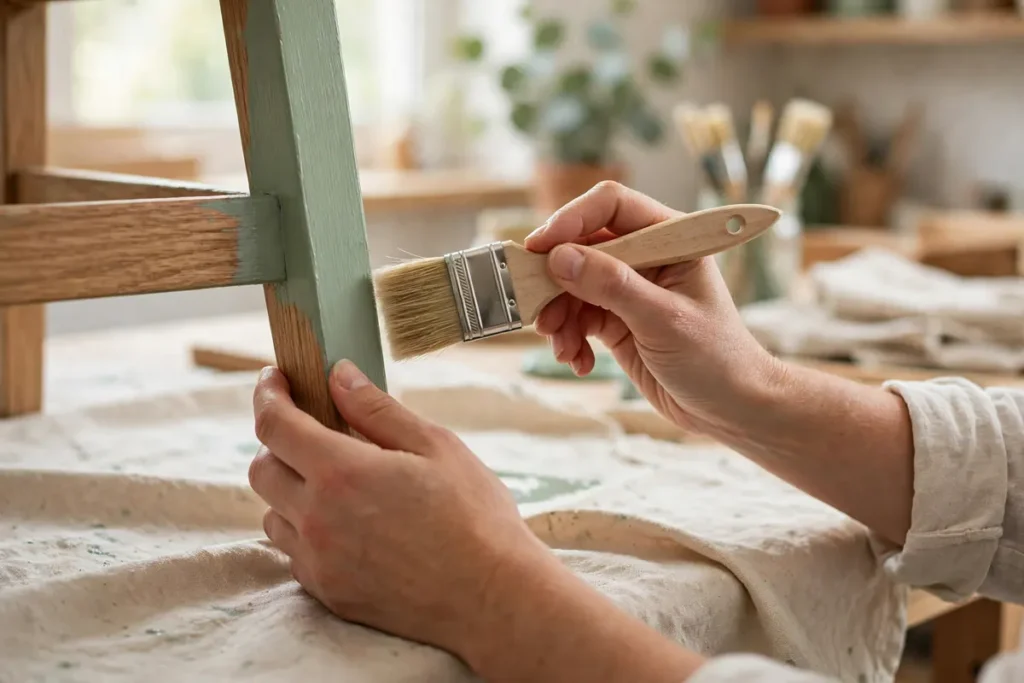
Start with sturdy piece having good shape but outdated finish. Remove handles/drawers, clean surface, sand lightly. Apply primer, then two thin coats of paint, letting each coat dry fully. Sage green, warm white, soft black, deep navy versatile choices. New handles complete transformation.
Paint a Bookshelf or Cabinet
Painted bookshelf can become focal point. Paint whole piece one color for clean look, or paint only back panel in contrasting color so books/decor stand out. For heavily used piece, choose durable furniture or cabinet paint, clear protective topcoat.
Update Chairs and Stools
Chairs perfect practice pieces because small/quick. Paint dining chairs in one color for unified set, or paint each chair different shade for playful look. Painted stool can become plant stand, side table, or extra seating.
Small Painted Accents With Big Impact
Frames, Trays, and Planters
If short on time, start with small accents. Paint can refresh old frames, trays, candle holders, plant pots in under hour. Painting several small items in same color creates coordinated look across shelf or table. Terracotta pots look especially good in soft white, sage, or dusty pink.
Stencils and Painted Details
Stencils add pattern without freehand skill. Geometric stencil on side table, floral stencil on drawer front, or border stencil along hallway can look far more expensive than it is. Use very little paint, build pattern in light layers. Interior door another overlooked canvas. Painting door, closet door interior, or window trim in soft accent color can make hallway feel designed.
Finish and Color Tips
Preparation/patience separate DIY look from professional finish. Clean every surface, sand glossy spots lightly, use primer on bare wood, stained wood, or strong color changes. Apply thin even coats, let each coat dry completely. For color, start with one shade already love in room, then add one lighter, one deeper supporting color.
Frequently Asked Questions
What is easiest painting DIY idea for beginners?
Painting small piece of furniture, tray, or planter. These projects need little preparation, dry quickly, let practice before try wall.
Do I need to sand before painting furniture?
Light sanding recommended, especially for glossy or varnished pieces. Helps paint stick, gives smoother finish. Only need to scuff surface evenly.
How many coats do I need?
Most projects need one coat of primer, two coats of paint. Light colors over dark surfaces may need third coat for even coverage.
What paint should I use?
For walls, use interior wall paint. For furniture, use furniture, cabinet, or trim paint for durability. Always check label, use matching primer.
Start With One Painted Piece
Do not need to repaint whole home to enjoy painted decor. Choose one wall, one dresser, or one tray, pick color you love, give yourself afternoon to try it. Explore more home decor/DIY ideas on Hommiest, save guide for next weekend project, share before-and-after results with us.