

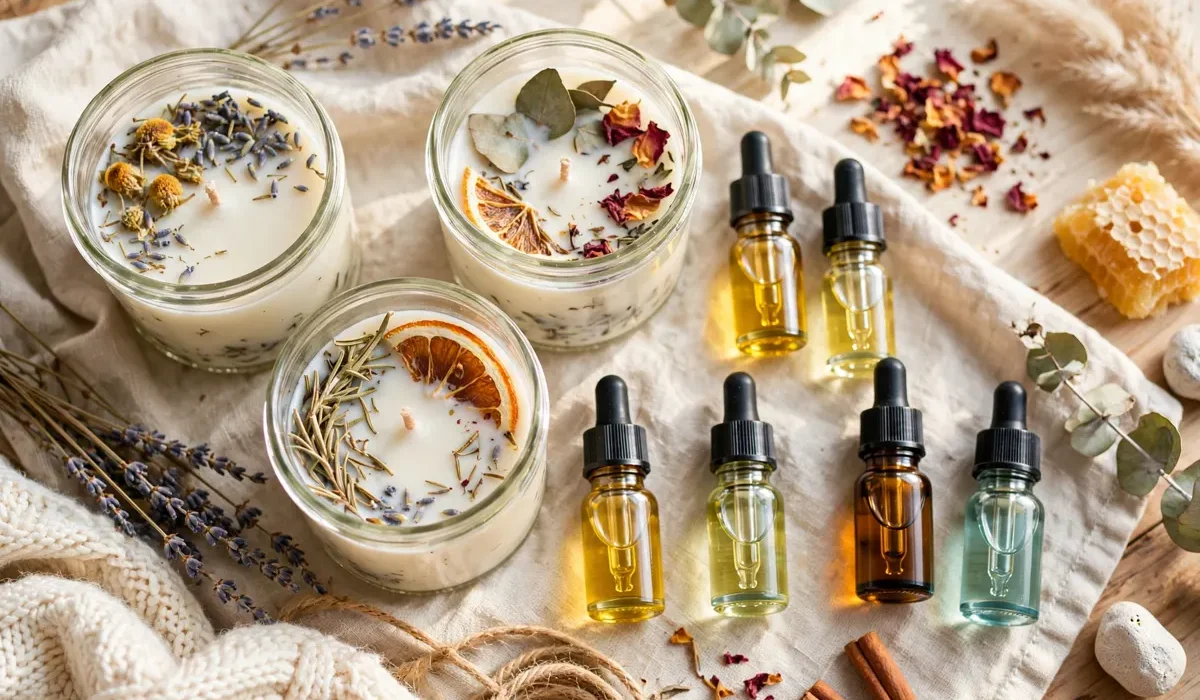
Melt wax, stir in beautiful oil, pour perfect candle, light it, then nothing happens. Room smells faintly of warm wax. Homemade scented candles live or die by scent. Guide focuses on that one part of craft: choosing essential oils, pairing them into layered blends, dosing for strong throw.
Why Scent Throw Matters
Scent throw is how far fragrance travels from candle. Cold throw is what smell lifting lid of unlit candle. Hot throw is what fills room once burns. Candle can have wonderful cold throw, almost no hot throw, which is why first batches disappoint. Heat changes everything. Light molecules evaporate fast, giving bright first impression fading. If candles smell strong in jar but weak in room, likely need more base notes, slightly higher fragrance load, longer cure.
Essential Oils vs. Fragrance Oils
Essential oils concentrated plant extracts from flowers, leaves, wood, peel, or resin. Smell natural/complex, but delicate. Many top notes, especially citrus, fade in hot wax. Fragrance oils lab made to hold up in candles, so often smell stronger. Essential oils can still work beautifully. Expect slightly higher dose than with fragrance oil, test small candle before full batch. Think in percentages of total weight, wax plus oil together. Many makers use 6-10 percent essential oil. Start at 8 percent, keep notes, adjust. Above 10 percent rarely helps, can cause sweating or poor burning.
The Three Layers of a Great Scent
Perfumers describe fragrance in three layers, candle blending works same way.
Top Notes
Top notes bright scents notice first: lemon, grapefruit, orange, peppermint, eucalyptus, rosemary. Fresh/uplifting, but evaporate fastest. Use for inviting opening, not to carry scent. Usually make up 20-30 percent of blend.
Middle Notes
Middle notes appear once candle burned a while: lavender, geranium, clary sage, pine, cinnamon bark, ginger. Give character, connect top to base, usually 40-50 percent of blend. If candle smells nice at first, then dull, often lacks strong middle.
Base Notes
Base notes heavy, warm, slow to fade: cedarwood, sandalwood, vanilla, patchouli, vetiver, frankincense. Anchor blend, deepen hot throw, make scent last, usually 20-30 percent. When in doubt, add base notes before more top notes.
7 Essential Oil Blends to Try
Blends given as parts, so can scale them. One part might be one teaspoon in test candle. Mix oils first, smell on paper strip, rest few minutes before judging. 1. Calm Evening: 3 parts lavender, 2 parts vanilla, 1 part cedarwood. Floral calm, rounded by warmth. Lovely for bedrooms. 2. Cozy Cabin: 3 parts pine, 2 parts cedarwood, 1 part sweet orange. Crisp forest feel, lifted so never smells heavy. 3. Fresh Kitchen: 3 parts lemon, 2 parts rosemary, 1 part peppermint. Clean/bright, without smelling like cleaning spray. 4. Warm Spice: 2 parts cinnamon bark, 1 part clove, 2 parts vanilla. Rich/bakery style. Use spice oils sparingly. 5. Spa Day: 3 parts eucalyptus, 2 parts lavender, 1 part tea tree. Cool/clean, softened by lavender. Keep tea tree light. 6. Citrus Sunshine: 3 parts grapefruit, 2 parts sweet orange, 1 part ylang ylang. Cheerful, with floral ylang ylang helping citrus last. 7. Earthy Autumn: 2 parts patchouli, 2 parts sweet orange, 1 part sandalwood. Deep/warm, kept bright by orange.
Dosing, Temperature, and Curing
For 200 grams of wax, 8 percent load means about 16 grams of essential oil. Weigh oils on scale, not by drops, since drop sizes vary. Add oils when wax cooled to supplier’s recommended range, below melting point but still liquid. Oil added to wax too hot loses top notes before candle sets. Stir gently for two minutes, then pour. Curing is step most beginners skip. Let candles cure at least three to seven days, two weeks better for many waxes. During curing, wax/oil keep binding, hot throw improves noticeably.
Troubleshooting Weak or Flat Smells
If candle smells weak, check three things: enough oil by weight, long enough cure, enough base notes. If smells flat, blend likely lacks layer. Lavender alone often smells thin, but little vanilla or cedarwood adds depth. If smells sharp, halve strong oils like eucalyptus, tea tree, or clove.
Safety Notes
Essential oils natural, but not harmless. Work in ventilated room, keep oils from open flames, never add water to hot wax. Wear gloves with undiluted oils. Store blends away from children/pets, check pet safety for oils you use. Never leave burning candle unattended, trim wick to about 6 millimeters before each burn.

Frequently Asked Questions
How much essential oil should I use?
Start with 6-10 percent of total candle weight, with 8 percent reliable starting point. Weigh oils, cure at least week, judge by hot throw.
Why does my candle smell weak when burning?
Common causes: too little oil, too short cure, no base notes, or wick too small for full melt pool. Test one fix at a time.
Can I use any essential oil in candles?
Not every oil holds up in hot wax. Citrus fades fastest, while woody/resinous base notes last longest. Test small candle first.
How long should candles cure?
At least three to seven days, two weeks better for many waxes. Curing lets wax/oil bind fully.
How can I make candles stronger without adding more oil?
Add base notes, pick wick for full melt pool, cure longer, pour at right temperature.
Bring Your Best Scent to Life
Great scented candles about balance: bright top notes, solid middle, base lingering. Start with one blend here, measure carefully, cure patiently, keep notes. Once find blend filling room, will have candle worth making again and again.