

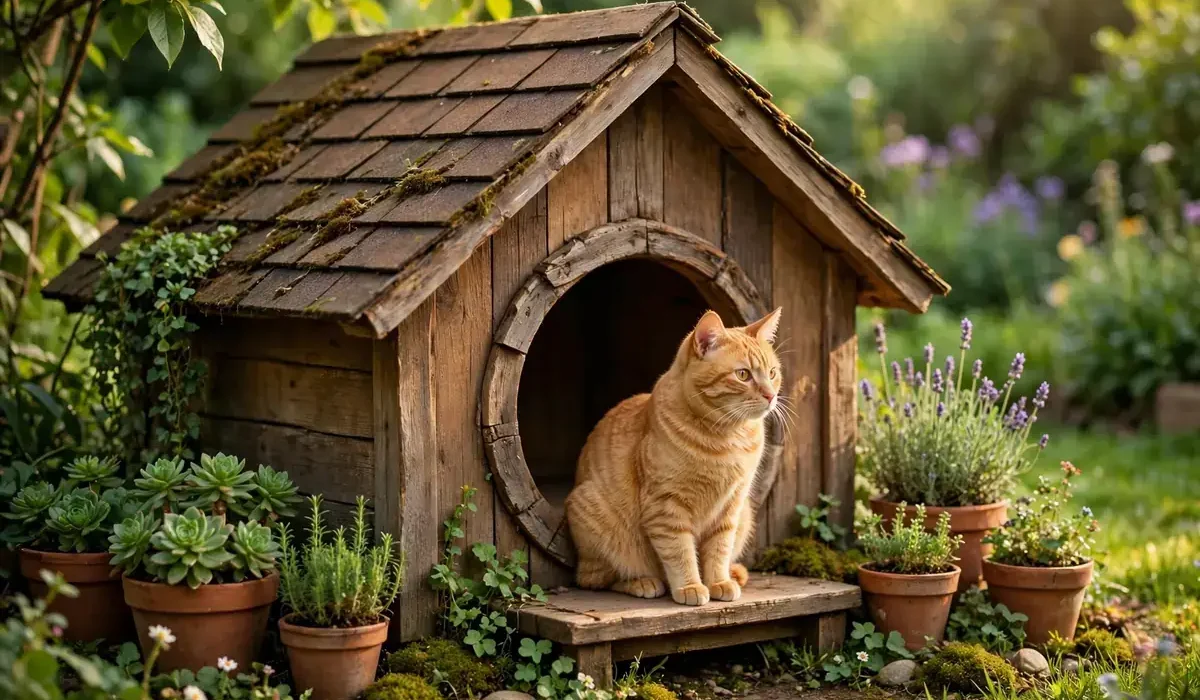
When temperatures drop, outdoor and stray cats need somewhere warm, dry, and safe to sleep. A DIY outside cat house gives them exactly that, and building one is easier and cheaper than most people think. With a few boards or a simple storage bin, some insulation, and an afternoon of work, you can build a shelter that protects a cat through rain, snow, and freezing nights. Here is how to build one, plus ten designs to fit every budget and skill level.
Why Outdoor Cats Need a DIY Outside Cat House
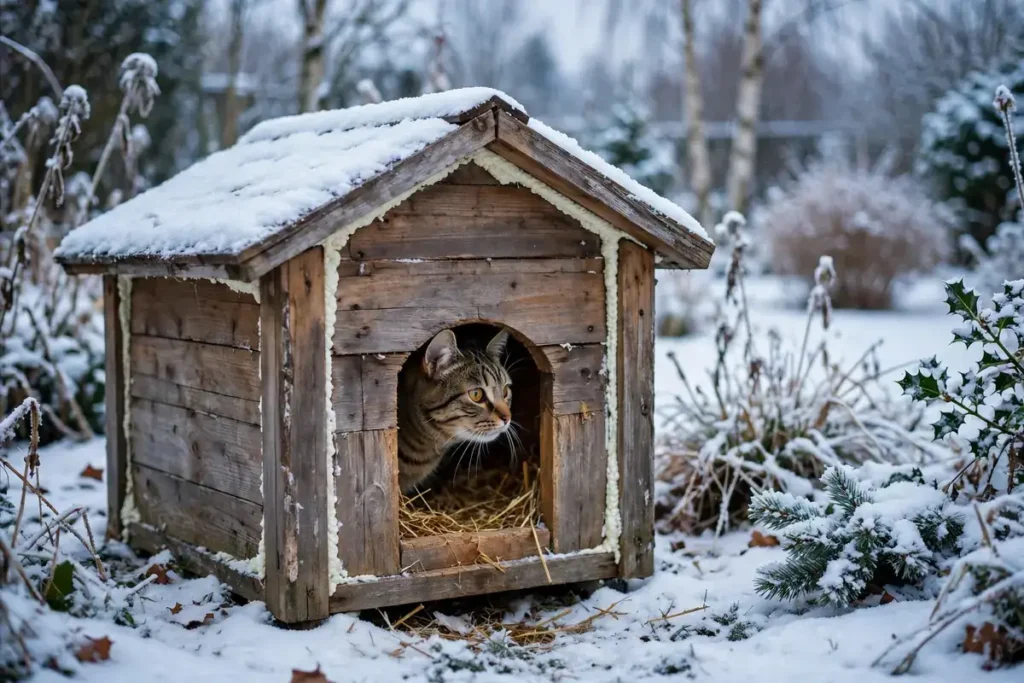
First, cats can survive outdoors, but cold, wet weather is dangerous for them. A wet cat loses body heat fast, and a cat sleeping in the open is exposed to wind, rain, and predators. A good shelter keeps the cat dry, blocks the wind, and traps body heat inside. Even a simple insulated box can be the difference between a comfortable winter and a dangerous one for a neighborhood or feral cat.
What You Need to Build a DIY Outside Cat House
Next, for a basic wooden shelter you need plywood or pallet wood, insulation foam boards, screws, a saw, a drill, and waterproof paint or sealant. For a no-tools version, you need a large plastic storage bin with a lid, a smaller foam cooler, straw for bedding, and a utility knife. Always use straw, not blankets or hay, for bedding: straw repels moisture and does not freeze, while blankets get wet and cold.
How to Build a Basic Insulated DIY Outside Cat House
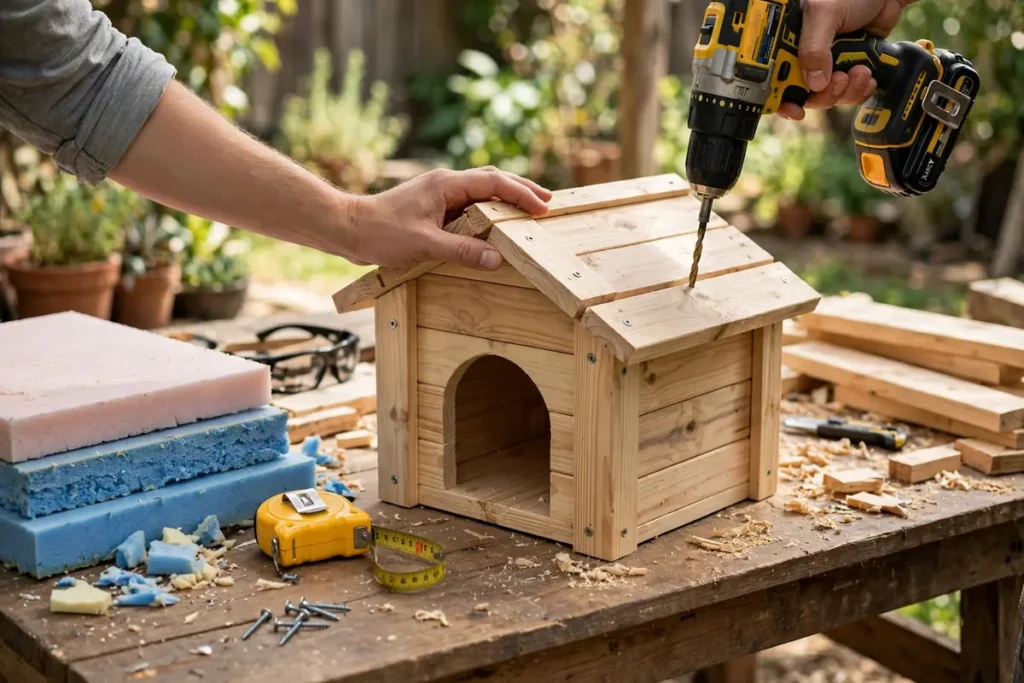
First, cut four walls, a floor, and a slanted roof from plywood, sized about 18 inches wide, 24 inches long, and 16 inches high, big enough for one or two cats but small enough to hold body heat. Cut a round entrance about 6 inches wide on one wall, off to the side so wind does not blow straight in. Line the inside walls with foam board insulation, screw the box together, and paint the outside with waterproof sealant. Add a thick layer of straw inside. Place the house on bricks or a pallet so it stays off the cold ground, and face the entrance away from the wind.
10 DIY Outside Cat House Ideas
1. The Insulated Storage Bin Shelter
Next, cut an entrance hole in a large plastic storage bin, line it with a foam cooler that has a matching hole, and fill it with straw. This is the cheapest and easiest cat shelter: no tools beyond a utility knife, and it takes under an hour.
2. The Wooden A-Frame House
Also, build a simple A-frame from plywood with a steep roof that sheds rain and snow. A-frames are sturdy, look charming in a garden, and give cats a dry sleeping loft.
3. The Pallet Wood Cottage
Then, take apart old pallets and build a small cottage with a slanted roof and a porch overhang. Pallet wood is free, weathered, and strong. Sand the rough edges and seal the wood against rain.
4. The Two-Bin Double Shelter
Next, join two storage bins side by side with a small connecting hole so two cats can share warmth or one cat can escape if another enters. This design works well for bonded pairs and colonies.
5. The Dog House Conversion
In addition, convert an old dog house into a cat shelter by adding insulation, shrinking the entrance with a plywood panel, and adding straw bedding. Dog houses are roomy, sturdy, and often free secondhand.
6. The Straw Bale Shelter
Then, stack straw bales into a small hut with a plywood roof. Straw bales insulate brilliantly and cost very little. Cover the roof with a tarp so rain stays out.
7. The Heated Pad House
Next, build any simple wooden shelter and add a microwavable heat pad or a heated outdoor pet mat inside. A little extra warmth helps older cats and kittens through the coldest nights.
8. The Porch Cat Condo
In addition, build a two-level wooden condo for a covered porch: a sleeping box below and a lookout platform above. Porch shelters stay drier and are easy to check and refill with food and water.
9. The Flower Pot Hideaway
Also, for a quick emergency shelter, tip a large terracotta or plastic flower pot on its side, weigh it down with a brick, and stuff it with straw. It is not a winter solution, but it gives a cat instant cover from rain.
10. The Feral Colony Shelter
Finally, for a group of cats, build a long insulated box with two entrances, one at each end, so cats always have an escape route. Place it in a quiet, sheltered corner of the yard, away from dogs and foot traffic.
Tips for a Safe and Warm DIY Outside Cat House
Overall, keep the entrance small, about 6 inches, so heat stays in and larger animals stay out. Always use straw bedding, and replace it when it gets damp. Raise the house off the ground on bricks or a pallet. Check the shelter weekly in winter, and clear snow from the entrance. Never use blankets, towels, or hay inside: they absorb moisture and freeze.
Frequently Asked Questions About DIY Outside Cat Houses
What size should a DIY outside cat house be?
For example, about 18 by 24 inches on the floor and 14 to 16 inches high is ideal for one or two cats. A shelter that is too large will not hold body heat.
What is the best insulation for a DIY outside cat house?
For example, rigid foam board insulation is best: it is cheap, easy to cut, and does not absorb water. Line the walls, floor, and roof, and cover the foam so cats cannot chew it.
Should I use straw or blankets inside a cat house?
In short, always use straw. Straw repels moisture and stays warm even when damp. Blankets and towels absorb water, freeze, and can make a cat colder.
How do I keep the cat house dry?
First, use a slanted roof, seal the wood, raise the house off the ground, and place it in a sheltered spot facing away from the wind. Check it after heavy rain.
Will cats actually use a DIY cat house?
Overall, most cats will, especially once it smells like straw and safety. Place food near the entrance for a few days, but never inside the shelter, and be patient. Some cats take a week or two to move in.
Final Thoughts on DIY Outside Cat Houses
In conclusion, a DIY outside cat house is one of the kindest projects you can build. It costs little, takes an afternoon, and gives an outdoor cat a warm, dry place to sleep all winter. Start with the simple storage bin shelter if you are short on time, or build a wooden cottage if you enjoy woodworking. Either way, a cat in your neighborhood will thank you.
Call to Action: Build one cat shelter this weekend and place it in a quiet corner of your yard. Add straw, check it weekly, and share a photo of your finished shelter. Explore more DIY pet and garden projects on Hommiest for your next build.