


A blank canvas is an invitation. It does not ask for perfect painting skills or expensive supplies. It just asks you to play. Craft canvas ideas are some of the most relaxing and rewarding projects you can try, because a canvas forgives mistakes, welcomes bold color, and turns into real wall art you can keep or give away. This guide focuses on canvas CRAFTS: painting, stencils, string art, tape art, and other hands-on techniques you can do on a blank canvas. These are not photo transfers, gallery styling, or printing projects. They are simple, joyful crafts that work for beginners, kids, families, and anyone who wants a creative afternoon without pressure.
Why Canvas Crafts Are Perfect for Beginners
Canvas crafts are low stress because the surface is sturdy, paint dries quickly, and you can always paint over a section you do not like. Acrylic paint is inexpensive, easy to clean up, and available in every color. Most projects take under an hour, and the finished piece looks polished enough to hang. You can work alone, craft with kids, or host a craft night with friends. Everyone starts with the same blank canvas and ends with something completely different.
Getting Started: Basic Supplies
Start with small to medium stretched canvases, such as 8 by 10 or 11 by 14 inches. Buy a multipack so you can try several ideas without worrying about wasting one. Acrylic paint is the best choice for canvas crafts. Get a basic set with red, yellow, blue, white, black, and a few favorite colors. Add a few brushes in different sizes: a large flat brush for backgrounds, a medium round brush for shapes, and a small detail brush for lines and dots. Keep painter’s tape, stencils, sponges, palette knives, pencils, and rulers nearby. For string art, you will need small nails, a hammer, and colorful embroidery thread or yarn. For stencil projects, add stencil brushes or foam daubers.
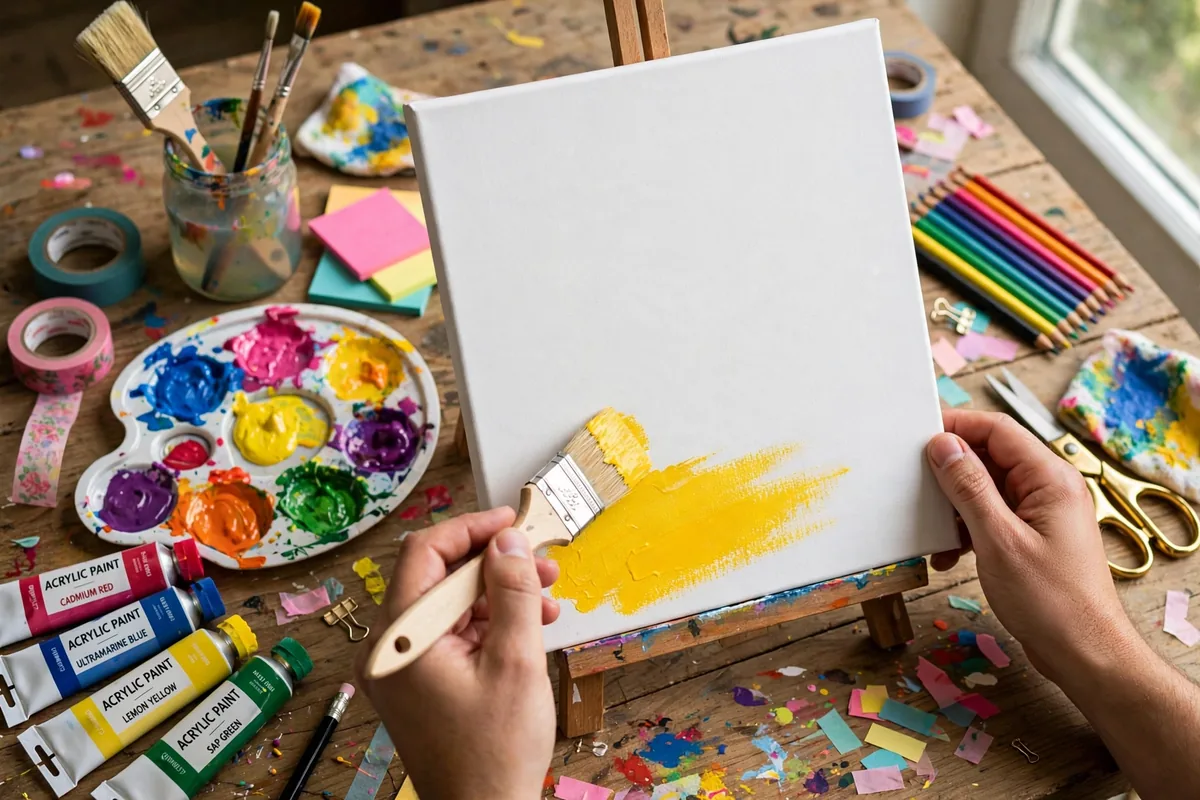
Idea 1: Easy Acrylic Canvas Painting
You do not need to paint a realistic scene to make beautiful art. Start by painting the whole canvas with a background color. While it is still slightly wet, add sweeping strokes of two or three contrasting colors. Blend where they meet, leave some areas bold, and add dots or lines with a small brush. Abstract painting is about color, movement, and mood, not perfection. For an easy landscape, paint three bands: sky, land, and water or ground. Add a sun or moon, a few hills, and simple trees made from triangles or dots. For a silhouette painting, paint a sunset background with blended oranges, pinks, and purples. Once dry, paint a simple black silhouette on top, such as a tree, a bird, or a city skyline. Silhouette paintings look dramatic and are much easier than they appear.
Idea 2: Stencil Canvas Art
Stencils give crisp shapes without freehand drawing, which makes them perfect for beginners and kids. Choose a stencil with a bold design, such as a flower, mandala, word, or animal. Tape the stencil firmly to the canvas so it does not shift. Use a stencil brush or foam dauber with very little paint, and dab straight up and down rather than brushing side to side. This prevents paint from bleeding under the stencil. Build color in thin layers, then peel the stencil away carefully while the paint is still slightly damp. Try a large mandala in the center of the canvas with metallic gold paint, a botanical stencil with green leaves, or a word stencil with an inspiring quote in a bold font. You can also layer stencils: paint one large stencil, let it dry, then add a smaller stencil on top in a contrasting color.
Idea 3: String Art on Canvas
String art turns a canvas into a tactile, colorful sculpture. Draw or trace a simple shape on the canvas, such as a heart, star, rainbow, or initial. Hammer small nails evenly around the outline, leaving enough nail height to wrap thread. Tie thread to one nail, then wrap it back and forth across the shape in random or patterned lines. Change colors as you go. When the shape feels full, tie off the thread and trim the end. Be careful with nails, and supervise children closely during this project. Use a simple outline for your first project. Keep nails evenly spaced for a neat look. Use bright thread on a dark painted canvas for strong contrast, or pastel thread on a white canvas for a soft look.
Idea 4: Tape Art and Pour Painting
Painter’s tape is a secret weapon for crisp, modern canvas art. Stick strips of painter’s tape across the canvas in geometric patterns: triangles, chevrons, stripes, or random angles. Press the edges down firmly so paint does not bleed. Paint each section a different color, let the paint dry, then peel the tape away slowly to reveal clean lines. Try a tape-resist word: tape the letters of a word onto the canvas, paint over the whole canvas, then peel the tape to reveal the word in the canvas color. Pour painting creates swirling, marbled effects with liquid acrylic paint. Mix acrylic paint with pouring medium until it flows like warm honey. Layer different colors in a cup without stirring, then pour the cup slowly over the canvas. Tilt the canvas to spread the paint and create swirls. Let it dry flat for at least 24 hours. Protect your table with plastic or newspaper, because pour painting is messy.
Finishing Your Canvas Crafts
Let every canvas dry fully before you hang it. Add a thin coat of clear varnish for extra protection and shine. Paint the edges to match the front, group small canvases for a playful gallery wall, or give a finished canvas as a handmade gift.
FAQ
What paint should I use for canvas crafts?
Acrylic paint is the best choice for most canvas crafts. It dries fast, cleans up with water, mixes easily, and works for painting, stenciling, tape art, and pour painting.
Can kids do canvas crafts safely?
Yes, with supervision. Choose washable acrylic paint for young children, cover the table, and supervise any project with nails, hammers, or sharp tools. Stencil, sponge, fingerprint, and tape art are especially kid friendly.
Do I need to prime a canvas before crafting?
Most store-bought canvases are pre-primed and ready to use. If you want extra smooth coverage or plan to use light colors, one coat of white gesso can help.
How do I fix a mistake on a canvas craft?
Let the area dry, then paint over it with your background color and try again. For tape art, press tape edges firmly to prevent bleeding. For stencil art, use less paint and dab straight up and down.
How long does a canvas craft take to dry?
Thin acrylic layers usually dry in 15 to 30 minutes. Thicker paint and pour painting need longer. Pour painting should dry flat for at least 24 hours before you move or seal it.
Final Thoughts
A blank canvas does not need to be scary. It just needs one idea, one color, and one brave first brushstroke. Try a stencil, a tape pattern, a string art heart, or a simple abstract painting. Pick up a canvas this weekend and try one of these craft canvas ideas. You may discover a new favorite hobby, and you will definitely end up with art that is uniquely yours.