

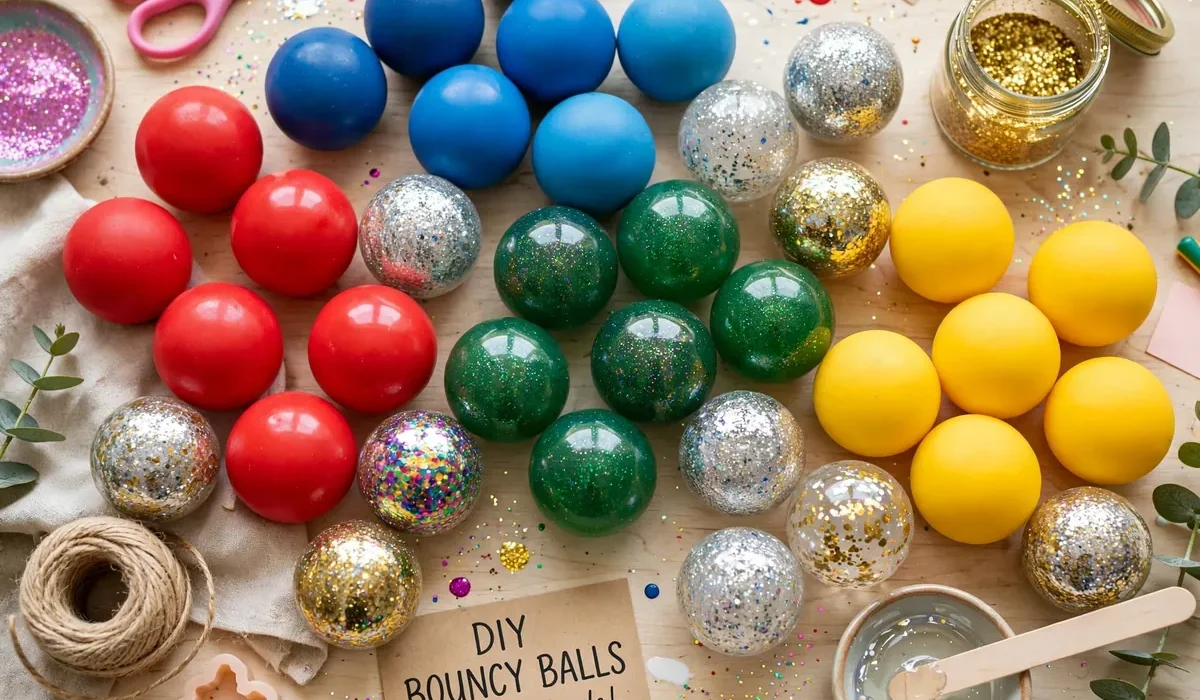
Making bouncy balls at home is one of the most satisfying crafts around. With a few household ingredients, you can create colorful, squishy, genuinely bouncy balls — and learn real science along the way. This complete guide covers several recipes, from the classic borax method to borax-free alternatives, plus troubleshooting, variations, and the science behind the bounce. Whether you are a parent, a teacher, or a curious crafter, this guide has everything you need.
Safety First
An adult should handle borax and supervise all recipes. Bouncy balls are not toys for children under 5. Keep all ingredients away from eyes and mouth. Wash hands after making and playing with bouncy balls. Never eat a bouncy ball or its ingredients.
Method 1: Classic Borax Bouncy Ball (Best Bounce)
This is the most reliable method and produces the bounciest ball.
Ingredients
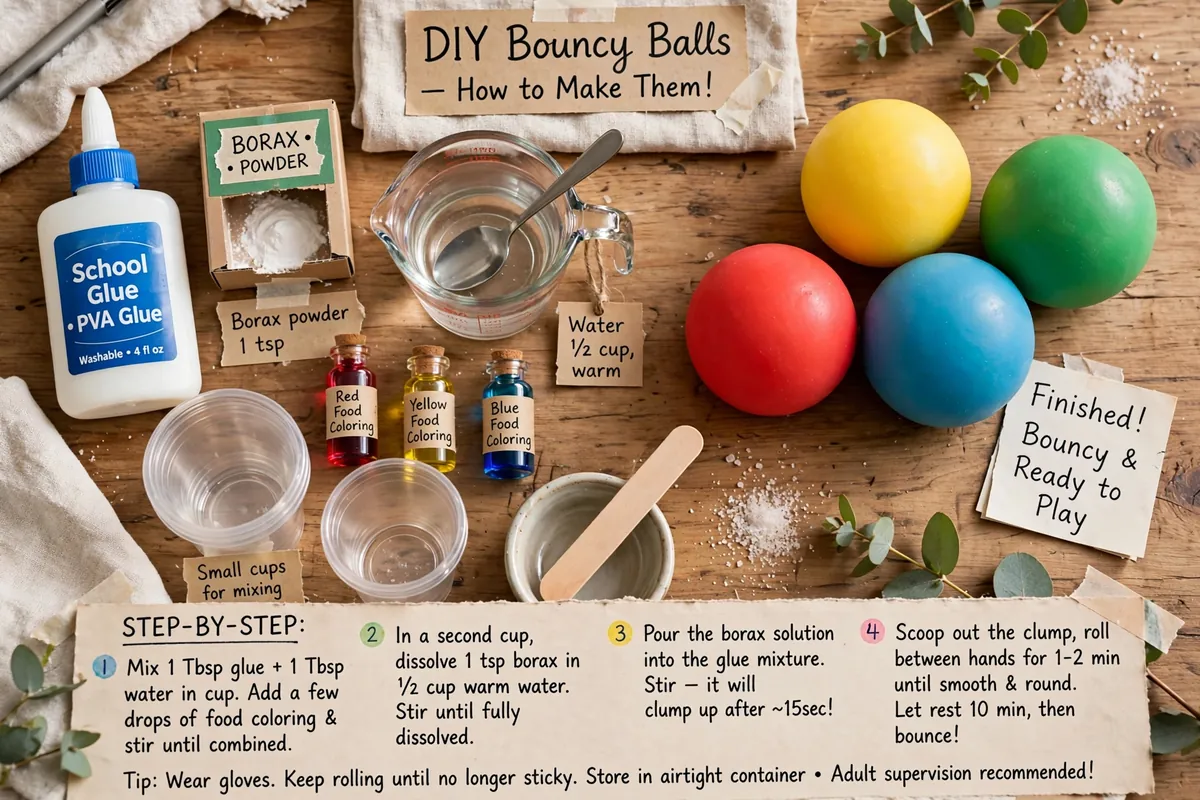
1 tablespoon white school glue (PVA glue). 1/2 teaspoon borax powder. 2 tablespoons warm water. Food coloring. 2 small cups, a spoon, and a paper towel.
Instructions
Dissolve 1/2 teaspoon of borax in 2 tablespoons of warm water. Stir well. In a second cup, mix 1 tablespoon of glue with food coloring. Pour the borax solution into the glue while stirring. The mixture will clump together. Scoop out the blob and knead it with your fingers. Roll it into a smooth, tight ball. Let it set for 2-3 minutes, then bounce. Result: A firm, high-bouncing ball that lasts several days in a sealed bag.
Method 2: Cornstarch Bouncy Ball (Borax-Free)
If you prefer to avoid borax, cornstarch makes a softer, gentler ball.
Ingredients
2 tablespoons cornstarch. 1 tablespoon white glue. 1 tablespoon water. Food coloring.
Instructions
Mix the cornstarch and water in a cup to make a smooth paste. Add the glue and food coloring, and stir. Knead the mixture with your fingers until it holds together. Roll into a ball and let it dry for 10-15 minutes. Result: A softer ball with a gentler bounce. Great for younger kids with adult supervision.
Method 3: No-Glue Bouncy Ball (Baking Soda + Vinegar Play)
This method is more of a science demonstration than a lasting toy, but kids love it.
Ingredients
Baking soda. Vinegar. Food coloring. A balloon.
Instructions
Fill a balloon halfway with baking soda. Add a few drops of food coloring. Carefully pour in a small amount of vinegar and quickly tie the balloon. The balloon will fizz and expand. Squeeze it gently — it bounces and squishes. Result: A fizzy, squishy balloon ball. Fun for a few minutes, but not a long-lasting toy.
Method 4: Super Bouncy Ball (Borax + Extra Kneading)
For the highest bounce, use the borax method with extra kneading.
Instructions
Follow Method 1, but knead the ball for a full 3-4 minutes. Roll it as smoothly and tightly as possible. Let it rest for 10 minutes before bouncing. Bounce on a hard surface like tile or wood. Result: The bounciest homemade ball — often bouncing to half its drop height or more.
Comparing the Methods
Method comparison: Borax — High bounce, Easy, Lasts days, Best for best overall bounce. Cornstarch — Medium bounce, Easy, Lasts hours to a day, Best for borax-free option. No-glue balloon — Low bounce, Easy, Lasts minutes, Best for science demo fun. Super bouncy — Highest bounce, Medium difficulty, Lasts days, Best for maximum bounce.
Fun Variations
Glitter Balls
Add fine glitter to the glue before mixing for a sparkly ball.
Glow-in-the-Dark Balls
Add glow-in-the-dark paint to the glue. Charge under a lamp, then bounce in the dark.
Marble Balls
Swirl two colors of glue together without fully mixing for a marble effect.
Scented Balls
Add a drop of vanilla or fruit extract to the glue for a scented ball.
Mini Balls
Divide the mixture before shaping to make two or three mini balls.
Troubleshooting
Ball Is Too Sticky
Knead it longer. If it stays sticky, dip it in the borax solution and knead again.
Ball Is Crumbly
You used too much borax. Start over with slightly less borax solution.
Ball Does Not Bounce
Roll it tighter and smoother. A compact, round ball bounces far better than a loose one. Try bouncing on a harder surface.
Ball Flattened Overnight
This is normal for homemade balls. Roll it back into shape before playing, and store it in a sealed bag.
Ball Dried Out
Homemade balls dry out after a few days. That is part of the fun — just make a fresh one.
The Science Behind Bouncy Balls
Glue contains long chains of molecules called polymers. Borax links those chains together in a process called cross-linking, turning liquid glue into a stretchy, rubbery solid. When the ball hits the ground, the rubbery material squashes and then springs back, pushing the ball upward. That spring-back is the bounce. Cornstarch works differently: it thickens the mixture and creates a soft solid, but with less spring, which is why cornstarch balls bounce less.
Bouncy Ball Activities
Bounce contest: See whose ball bounces highest. Target practice: Bounce balls into cups or bowls. Science journal: Record bounce heights for different recipes and compare. Gift making: Make a set of colorful balls as a party favor or gift.
Frequently Asked Questions
How do you make DIY bouncy balls?
The classic method: mix 1 tablespoon of white glue with food coloring, then stir in a solution of 1/2 teaspoon borax dissolved in 2 tablespoons of warm water. Knead and roll into a ball.
Can you make bouncy balls without borax?
Yes. The cornstarch method uses cornstarch, glue, and water to make a softer ball without borax. It bounces less but is a good alternative.
How long do homemade bouncy balls last?
Borax balls last several days in a sealed bag. Cornstarch balls last hours to a day. All homemade balls eventually dry out — just make a fresh one.
Why is my bouncy ball sticky?
Stickiness is normal at first. Knead the ball for a few minutes and it will firm up. If it stays sticky, dip it in the borax solution and knead again.
Are DIY bouncy balls safe for kids?
Yes, with adult supervision. An adult should handle borax, and children should wash their hands after playing. Bouncy balls are not for children under 5.
Final Thoughts
Now you know how to make DIY bouncy balls four different ways — from the classic borax ball to a borax-free option. Pick a method, gather your supplies, and start bouncing. Try one bouncy ball recipe today, and explore more fun craft and science ideas on Hommiest.