

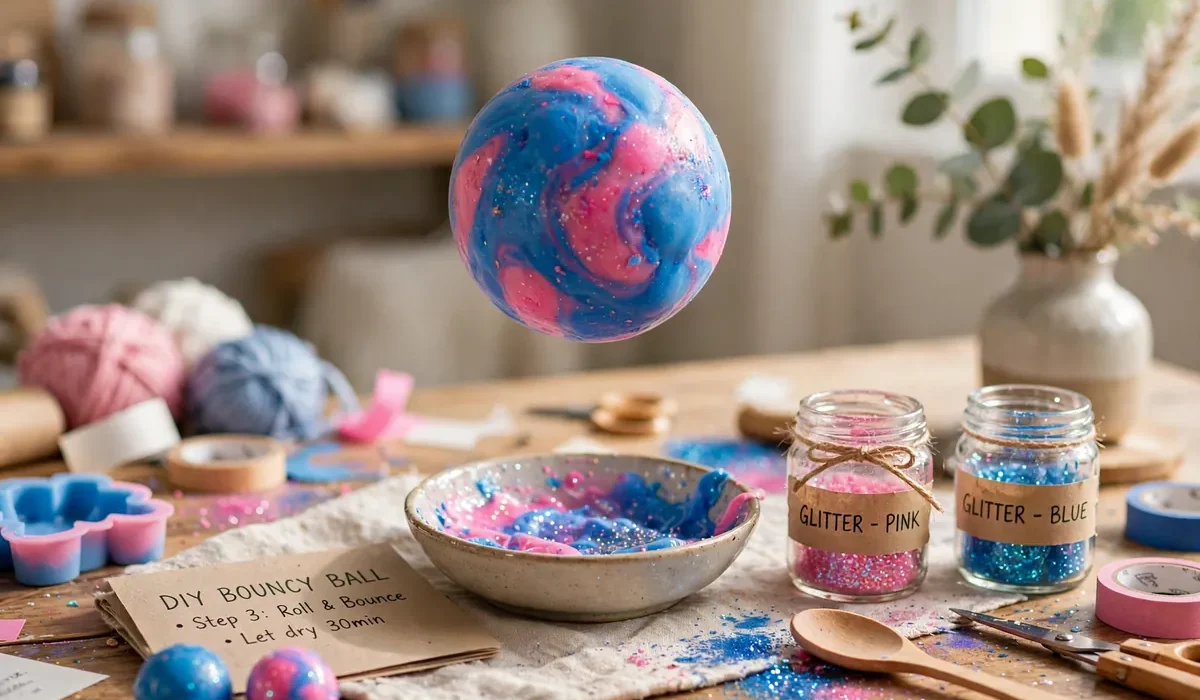
A bouncy ball is a small, squishy, endlessly entertaining toy — and making one yourself takes just 10 minutes. This single DIY bouncy ball project uses basic supplies, a simple method, and delivers a toy you can actually play with the moment it is done. This is a perfect quick craft for kids, a fun science experiment, and a satisfying little project for anyone who loves hands-on making.
What You Need
1 tablespoon white school glue (PVA glue). 1/2 teaspoon borax powder. 2 tablespoons warm water. Food coloring (any color you like). 2 small disposable cups. A spoon or craft stick for stirring. A plastic bag or paper towel for kneading. Safety note: Borax should be handled by an adult. Keep it away from eyes and mouth, and wash hands after crafting. This project is not for children under 5.
Step-by-Step Instructions
Step 1: Mix the Borax Solution
In the first cup, stir 1/2 teaspoon of borax into 2 tablespoons of warm water. Stir until the borax dissolves as much as possible. This is your activator solution.
Step 2: Mix the Glue
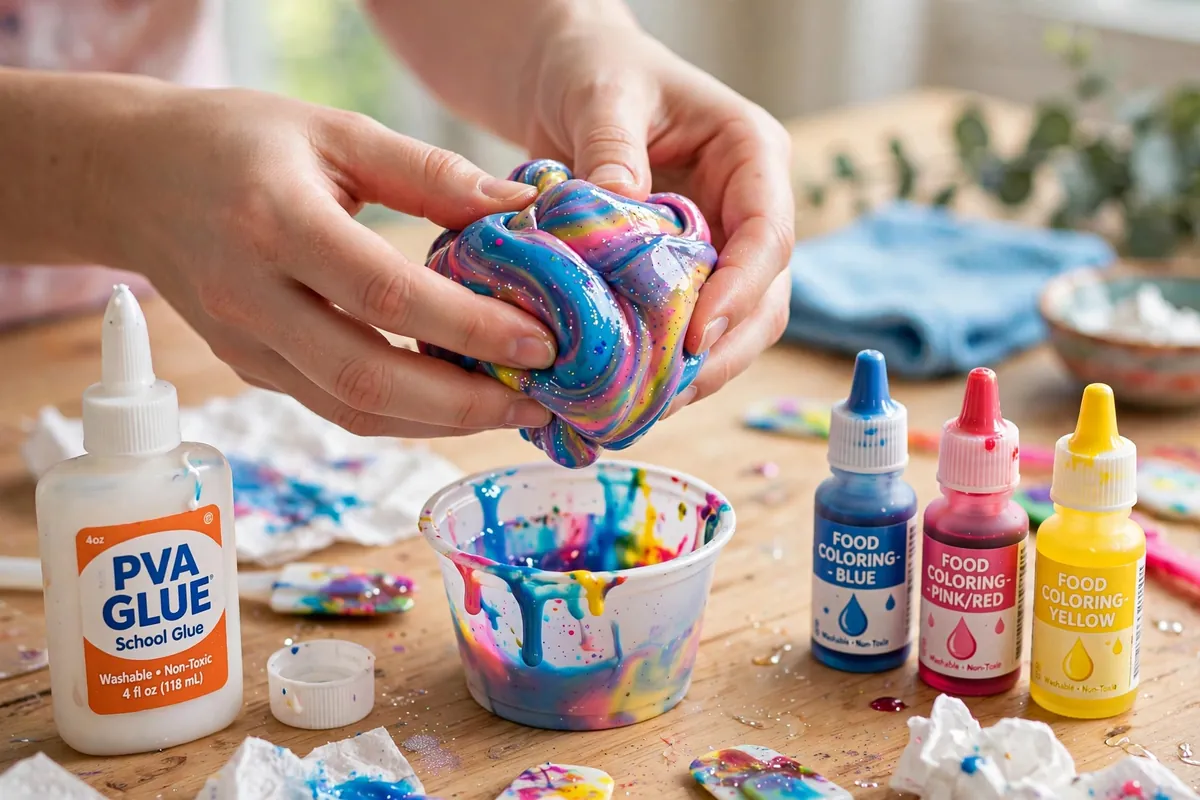
In the second cup, pour 1 tablespoon of white glue. Add a few drops of food coloring and stir well. This is where your ball gets its color — be bold.
Step 3: Combine the Mixtures
Slowly pour the borax solution into the glue while stirring continuously. The mixture will start to clump and pull together almost immediately. Keep stirring until it forms a soft, rubbery blob.
Step 4: Shape the Ball
Scoop the blob out of the cup with your fingers. It will feel sticky at first — that is normal. Roll it between your palms, pressing firmly, until it forms a smooth ball. If it is too sticky, knead it for another minute; it will firm up.
Step 5: Let It Set
Place the ball on a paper towel for 2-3 minutes to firm up. Then give it a test bounce. Congratulations — you just made a bouncy ball.
How to Make It Bounce Better
Roll it tight. A smooth, compact ball bounces higher than a lumpy one. Let it rest. A few minutes of setting time improves the bounce. Bounce on a hard surface. Tile, wood, or concrete floors give the best bounce. Keep it dry. Water makes the ball sticky and soft.
Fun Variations
Glitter Ball
Add a pinch of fine glitter to the glue before mixing. The result is a sparkly ball that catches the light.
Glow Ball
Add a few drops of glow-in-the-dark paint to the glue. Charge the ball under a lamp, then bounce it in the dark.
Marble Ball
Mix two colors of glue in the same cup, but do not fully blend them. The result is a swirled, marble effect.
Mini Balls
Divide the mixture in half before shaping to make two mini bouncy balls — perfect for sharing.
Troubleshooting
My Ball Is Too Sticky
Knead it for another minute or two. The stickiness usually goes away as the borax fully reacts with the glue. If it is still sticky, dip it briefly in the borax solution and knead again.
My Ball Is Too Hard or Crumbly
You may have added too much borax. Next time, use slightly less borax solution. A small amount goes a long way.
My Ball Does Not Bounce Well
Roll it smoother and more tightly. A compact, round ball bounces much better than a loose or lumpy one.
My Ball Flattened Overnight
Bouncy balls made this way slowly flatten if left sitting. Just roll it back into a ball before playing. Store it in a sealed plastic bag to keep it fresh.
How Long Does a DIY Bouncy Ball Last?
A homemade bouncy ball stays bouncy for several days if stored in a sealed bag. Over time it will dry out and lose its bounce — but that is part of the fun. Making a new one takes just 10 minutes.
A Quick Science Lesson
Making a bouncy ball is chemistry in action. Glue contains long chains of molecules called polymers. Borax links those chains together — a process called cross-linking — which turns liquid glue into a stretchy, rubbery solid. That rubbery texture is what makes the ball bounce.
Frequently Asked Questions
How do you make a DIY bouncy ball?
Mix 1 tablespoon of white glue with food coloring, then stir in a solution of 1/2 teaspoon borax dissolved in 2 tablespoons of warm water. Knead the mixture and roll it into a ball.
Is a DIY bouncy ball safe for kids?
Yes, with adult supervision. An adult should handle the borax, and children should wash their hands after playing. The ball is not a toy for children under 5, and it should never be put in the mouth.
Why is my bouncy ball sticky?
Stickiness is normal at first. Knead the ball for a minute or two and it will firm up. If it stays sticky, dip it in the borax solution and knead again.
How long does a DIY bouncy ball take to make?
About 10 minutes, including a few minutes of setting time. It is one of the fastest DIY crafts you can make.
Can I make a bouncy ball without borax?
Yes. Cornstarch-based methods also work, though the balls tend to be less bouncy. See our complete guide to bouncy ball recipes for more methods.
Final Thoughts
A DIY bouncy ball is proof that the simplest projects can be the most fun. Ten minutes, a few supplies, and one satisfying bounce — what are you waiting for? Make your own DIY bouncy ball today, and explore more quick craft and science ideas on Hommiest.