


A blank canvas is full of possibility, and also a little intimidating. You bought a multipack on sale, used two, and now the rest lean against a closet wall, waiting. Or you finished a painting, hated it, and the canvas feels wasted. If you are wondering what to do with canvas, the good news is that a canvas is one of the most forgiving craft supplies you own. You can paint over it, cut it, collage it, gift it, or use it to practice without pressure. This guide covers practical uses for blank and leftover canvases: quick projects, thoughtful gifts, skill-building practice, and clever upcycling.
First, Sort Your Canvas Stash
Before you start, take five minutes to sort what you have. Group blank canvases by size, set aside any with dents or loose corners, and pull out the painted ones you no longer love. Small canvases are perfect for quick gifts and experiments. Medium canvases suit wall art and photo transfers. Large canvases work for statement pieces and family art nights. Check the back of each canvas. A canvas with a sturdy wooden frame and tight fabric is worth keeping for finished art. A warped or sagging one is still useful for practice, collage, or cut-up projects. Nothing has to go in the bin yet.
Quick Canvas Projects Under an Hour
When you want a win today, pick a small canvas and a simple idea. These projects are forgiving, fast, and genuinely satisfying.
Paint a Simple Abstract
Pick three colors you love, paint large shapes or sweeping brushstrokes, and let the colors overlap. Add one metallic accent, a line of gold or copper, and suddenly the piece looks intentional. Abstracts are perfect for matching a room because you control the palette completely.
Make a Mini Quote Canvas
Paint a soft background, let it dry, and add a short favorite quote in neat lettering or with a paint pen. Keep the words short so the lettering stays readable. These small canvases make lovely desk art, shelf decor, and gifts.
Try a One-Color Silhouette
Paint the whole canvas one bold color, then paint a simple silhouette on top in black or white: a tree, a cat, a house, a mountain range. Silhouettes look polished even when the shapes are simple, because the contrast does the work.
Canvas Ideas for Gifts
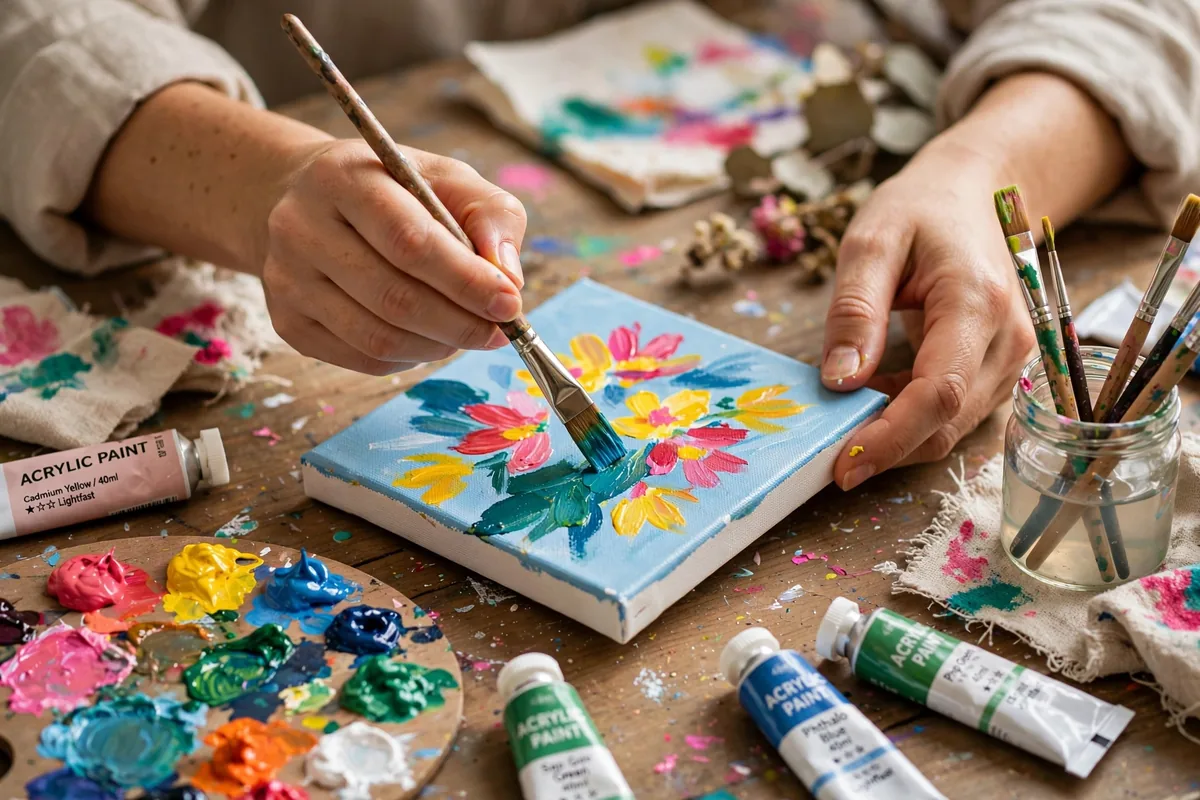
A handmade canvas gift feels personal because you chose the colors, the words, and the subject for one person. Best of all, most of these gifts cost very little. A pet portrait, simplified. Paint a bold background in your friend’s favorite color, then paint their pet as a simple, charming shape with a few defining features: floppy ears, a curly tail, a spot over one eye. Add the pet’s name underneath. A memory canvas. Print a favorite photo in black and white, attach it to the canvas with decoupage glue, and paint a soft border around it. Add a date or a place name in small letters. This turns a phone photo into a keepsake. A set of mini canvases. Paint three or four small canvases in a matching palette with a simple theme: seasons, coffee cups, leaves, or geometric shapes. A matching set looks far more impressive than a single piece and hangs beautifully in a hallway or kitchen. A canvas for a child’s room. Paint their name in big friendly letters, add stars, rainbows, or dinosaurs, and seal it with a clear coat. Kids love seeing their name on real art.
Use Canvases to Practice Without Pressure
Many people freeze in front of a blank canvas because they worry about wasting it. Reframe it: a cheap canvas from a multipack is practice paper with a wooden frame. Dedicate one canvas to color mixing. Paint swatches, gradients, and blends until you understand how your paints behave. Use another for brushwork: long strokes, dry brushing, stippling, and blending. Try painting the same simple subject three times on three small canvases, each in a different style: realistic, loose, and abstract. Comparing the three teaches you more than any tutorial. If a practice painting goes wrong, paint over it. Acrylic paint covers acrylic paint very well. A thin layer of white or a mid-tone color resets the surface, and professional artists repaint canvases all the time.
Upcycle a Canvas You No Longer Love
A painting you dislike is not a failed canvas. It is a canvas with texture and history, ready for a second life. Paint over it. Sand lightly, apply a coat of gesso or a mid-tone acrylic, and start fresh. The old texture underneath can add interesting depth. Collage over it. Cover the old painting with torn paper, fabric scraps, old book pages, or dried flowers, using decoupage glue. Add paint on top to tie it together. Cut it up. Remove the fabric from the frame and cut it into bookmarks, gift tags, or mini art cards. Turn it into a memo board. Cover a sturdy canvas with fabric, add ribbon in a crisscross pattern, and pin photos, notes, and tickets under the ribbons.
FAQ
What can I do with a blank canvas if I cannot draw?
Try abstract painting, paint pouring, silhouette art, or a quote canvas. These projects rely on color and simple shapes rather than drawing skill.
Can I paint over an old acrylic painting?
Yes. Sand lightly, apply gesso or a coat of acrylic paint as a base, let it dry, and paint your new design on top.
What is the easiest canvas project for beginners?
A small abstract or a one-color silhouette is the easiest starting point. Both look polished with simple shapes and a limited palette.
How do I seal a finished canvas painting?
Apply a thin coat of clear acrylic varnish once the paint is fully dry. It protects the colors and gives the piece a finished look.
Start With One Canvas Today
Pull one canvas out of the closet, pick the smallest idea on this list, and give yourself thirty minutes. A quick abstract, a quote for your desk, or a tiny gift for a friend is all it takes to turn that blank canvas from a guilty reminder into something you are proud of. Your next favorite piece of wall art might already be leaning against your wall.