

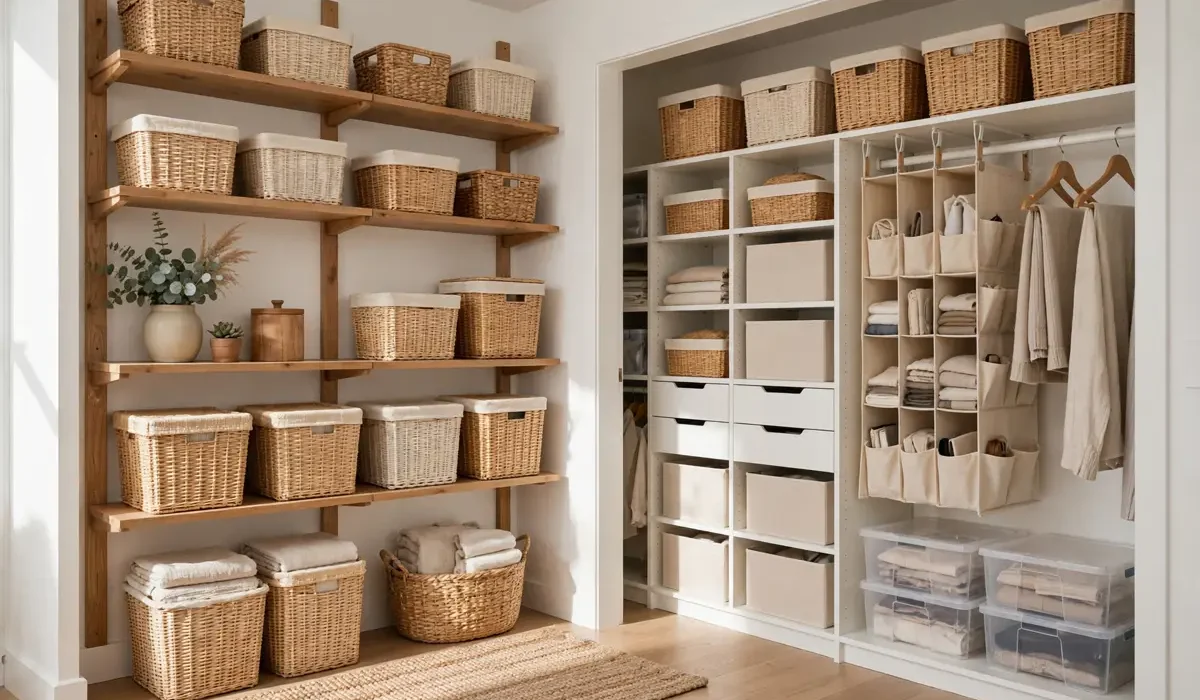
A tidy home does not happen by accident. It happens when everything has a place, and storage fits the way you live. With a few budget friendly DIY projects, basic tools, and a free weekend, you can build storage that looks custom and keeps clutter under control. This guide covers kitchen, closet, garage, and home office, plus tips to keep each system working.
Start With a Simple Plan
Walk through your home with a notebook. For each room, list the three things that always end up out of place. In the kitchen, it might be lids and spices. In the closet, shoes. In the garage, tools. Those hot spots are your project list. Focus on daily friction first. Measure your spaces before you shop for bins and lumber, so containers actually fit. Set a budget per room. Many projects below cost under 50 dollars if you reuse what you have.

Kitchen: Storage That Makes Cooking Easier
Pull Out Cabinet Organizers
Deep cabinets hide items at the back. Build a pull out organizer from plywood, drawer slides, and screws, sized to fit. Add low sides to keep bottles upright, and label the front edge.
Spice and Lid Stations
For spices, mount a slim shelf inside a cabinet door, or build a stepped riser for a drawer so every jar is visible. For lids, fix a tension rod inside a cabinet door to hold lids upright. Label jars consistently.
Open Shelves and Hanging Rails
Floating shelves above the counter can hold daily dishes, mugs, and oils. Use matching containers and leave breathing room between groups. A hanging rail with S hooks under a shelf holds utensils and small baskets.
Pantry Zones With Labeled Bins
Divide the pantry into zones with bins labeled breakfast, snacks, baking, and grains. Place heavy items low, everyday items at eye level, and rare items up high.
Closet: A Boutique Feel on a Budget
Double Your Hanging Space
Most closets waste vertical space. A second hanging rod halfway down doubles room for shirts, pants, and short jackets. Use a tension rod or mounted rod, and keep long dresses on one side.
Shelf Dividers and Drawer Inserts
Build drawer inserts from thin plywood, foam board, or sturdy cardboard covered in contact paper. Create sections for socks, accessories, and small items. Add dividers to shelves to keep stacks from toppling.
Shoe and Accessory Storage
A slanted shoe shelf, a hanging door organizer, or clear stackable boxes can end the shoe pile on the floor. Mount hooks inside the door for scarves, belts, and bags. A pegboard panel works for hats and jewelry.
Seasonal Rotation System
Store off season clothes in labeled bins on a high shelf or under the bed, and swap them when seasons change. This keeps your everyday closet focused on what you wear now. Use vacuum bags for bulky coats.
Garage: Tame Tools, Gear, and Bulk Storage
Wall Panels and Pegboard for Tools
Install pegboard above your workbench to hang tools where you can see them. Outline each tool with a marker so its spot is obvious. Group tools by task, and keep the most used at arm height.
Overhead and High Shelving
For items you do not need weekly, go high. Overhead shelves above the garage door can hold seasonal decor, camping gear, and bins. Anchor into studs, label bins on two sides, and keep a step stool nearby.
Sports Gear and Bike Storage
Build a ball corral from bungee cords and a frame, or hang a mesh bag for balls. For bikes, wall hooks or a vertical rack free floor space. Add a bin per sport.
Workbench With Built In Storage
Build a sturdy bench from 2×4 lumber and plywood, with a lower shelf and a pegboard back for tools. Add small jars for screws and nails.
Home Office: Storage That Helps You Focus
Cable Management and Charging Station
Build a charging station inside a drawer or a box with holes for cords. Use cable clips along the desk back to hide chargers, and label each one. Keep only laptop, notebook, and one or two essentials on the desk.
Floating Shelves and Filing Zones
Floating shelves above your desk can hold books and binders. For papers, use three zones: to do, to file, and archive.
Drawer Organizers and a Command Center
A drawer organizer keeps pens, notes, chargers, and batteries from mixing. If your office is also a family hub, add a command center with a calendar, notes board, mail sorter, and hooks for keys.
Small Space and Budget Tips
In small spaces, think vertical. Use backs of doors, sides of cabinets, and space above doorways. Over door hooks and slim rolling carts add storage without taking floor space. Choose double duty furniture, like a bench with storage inside. On a tight budget, start with what you have. Repurpose jars, use tension rods as dividers, and turn sturdy boxes into labeled bins. The best systems are the ones you maintain.
How to Keep Your Systems Working
Make putting things away as easy as taking them out. Use labels, open bins for daily items, and a home for everything near where you use it. Try a five minute nightly reset, and audit one room each month. If a system keeps failing, make the right spot easier to reach.
FAQ
What are the easiest DIY organization projects for beginners?
Start with labeled bins, drawer dividers, and over door hooks. Then try floating shelves or a pegboard wall.
How can I organize my home on a small budget?
Reuse jars, boxes, and baskets you own. Focus on one hot spot at a time, and label everything.
What is the best way to organize a small closet?
Add a second rod, use shelf dividers, and store off season clothes in labeled bins.
How do I keep my garage organized long term?
Use wall storage for tools, labeled bins for categories, and overhead shelves for seasonal items. Give every tool a marked spot, and reset after each project.
How can I organize a home office in a small space?
Use floating shelves, a drawer charging station, and a three zone filing system. Keep only daily essentials on the desk, and add a small command center for mail and keys.
Final Thoughts
DIY home organization is not about perfection. It is about simple systems that fit your life. Start with one room and one project this weekend.