

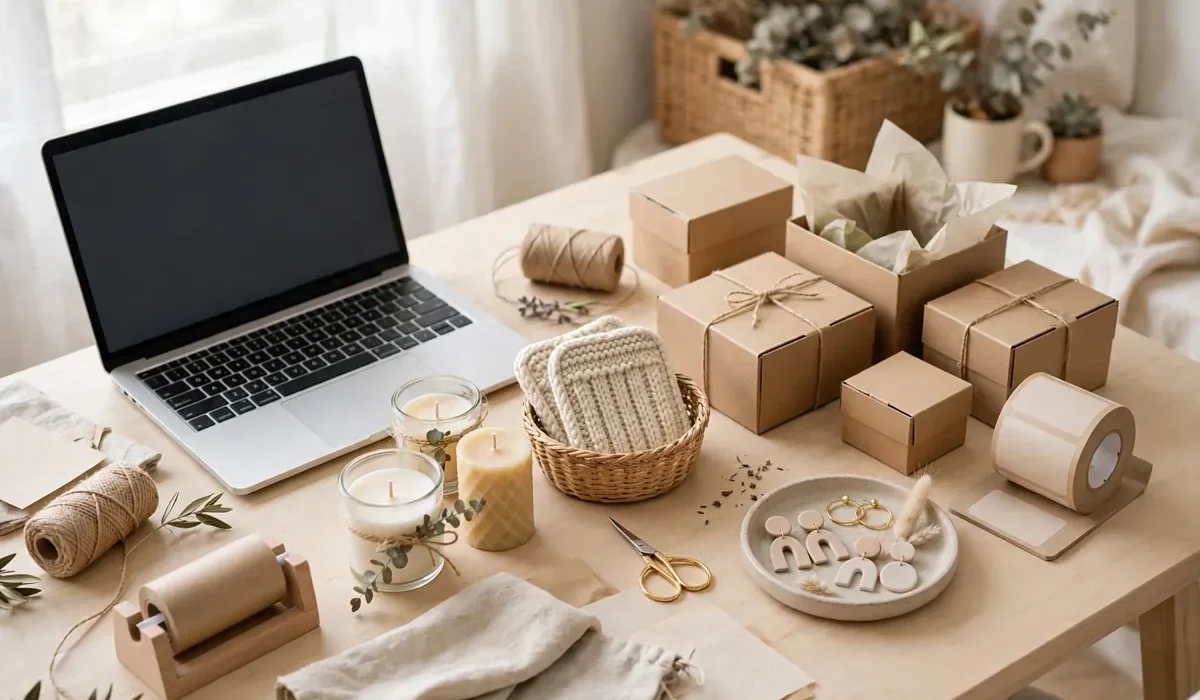
Many makers start crafting for fun — and then friends start asking, “Can you make one for me?” That question is beginning of small business. Learning to make and sell crafts for profit is less about talent and more about systems: knowing costs, pricing for profit, building simple brand, treating hobby like tiny business without losing joy.
From Hobby to Business: What Actually Changes
When you craft for yourself, you can spend hours on one piece and ignore cost. When you make and sell, time and money matter. That does not mean work becomes less creative. It means smarter choices: repeat designs that sell, buy materials in bulk, set limits on custom work. Three mindset shifts: You are not just making product. You are selling finished, packaged, shipped experience. Your time has price. If product takes 2 hours and sells for $12, it is hobby, not income. Consistency beats perfection. Simple product you can remake 50 times will earn more than complex piece you can only make once.
How Much Does It Cost to Start?
Most craft businesses in US and Europe can start with $100-$300. Core supplies for one product line: $60-$150. Basic tools: $20-$60. Packaging: $25-$50. Marketplace/shop fees: $0-$30 to start. Photography: $0 if you use daylight and phone. Start with one product line, not five. Reinvest first profits into more materials.
Track Every Cost From Day One
Keep simple spreadsheet: date, item, cost, notes. Include hidden costs: shipping boxes, printer ink, market stall fees, samples and mistakes.
Pricing for Profit: The Formula That Works
Many makers underprice because they feel guilty charging for handmade work. Buyers pay for materials, skill, time, packaging, gift-ready result — not just supplies. Formula: Materials + Labor + Overhead + Profit = Price. Materials: everything in one finished item including packaging. Labor: time x fair hourly rate. Start at least $15-$20/hour in US, or local equivalent in Europe. Overhead: 10%-15% of materials+labor. Profit: at least 20%-30% on top. Example: Candle $5 materials, 20 min ($6 labor at $18/hr), $1.50 overhead, +25% profit = ~$15.70 wholesale-style. Retail should be higher — often $22-$28 — because retail includes fees, marketing, photos/messages time. Check price against similar products, but do not copy cheapest seller.
Choose Products That Are Profitable to Repeat
Best make-and-sell products: Fast to remake (batch 10-20 in one session), Light and durable (cheap shipping, rare breakage), Easy to photograph, Giftable (birthdays, holidays, weddings). Strong examples: candles, clay earrings, beaded bracelets, greeting-card sets, tote bags, small home-decor. If favorite craft is slow/fragile, keep as premium made-to-order and build steady income around faster product.
Branding on a Small Budget
Branding is not fancy logo. It is feeling buyers get when they see shop, packaging, messages. Clear consistent brand helps buyers remember and recommend you.
Pick Simple Brand Foundation
Name: short, easy to spell/say. Colors: two main + one accent. Use on banner, packaging, social posts. Voice: friendly and helpful.
Make Packaging Part of Your Brand
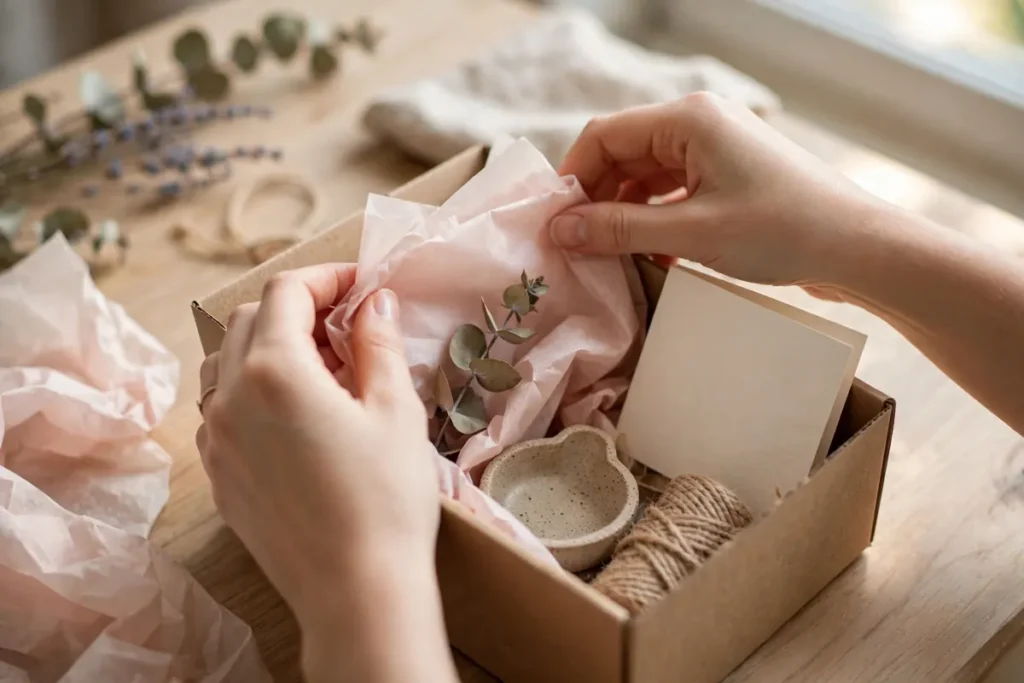
Clean kraft boxes, tissue paper in brand color, small sticker, handwritten thank-you note are enough. Add card with shop name, care instructions, QR code to shop.
Finding Your First Buyers
You do not need thousands of followers for first 10 sales. Tell warm audience first: friends, family, coworkers, local groups. Offer simple launch discount for first 10 orders in exchange for honest photos/reviews. List where buyers already search: Etsy, local markets, Pinterest for long-term traffic. Post proof, not just products: packing videos, customer photos, market clips, “sold out” updates. Collect emails from day one: simple signup for new products/holiday drops.
Managing Time When You Have a Job
Making day: batch products in one session. Admin day: photograph, list, answer messages, pack orders together. Rest day: no making, no messages. Burnout kills more small shops than slow sales. Set clear limits for custom orders. Example: accept custom colors but not custom designs, or require at least one week for personalization.
Money Habits That Keep Your Business Healthy
Separate money: one account/wallet for craft income/costs. Pay yourself: transfer fixed amount after each month. Save for taxes: set aside 20%-30% of profit in US, or check local rate in Europe. Reinvest wisely: first on materials for bestsellers, then better packaging, then time-saving tools.
A Simple 30-Day Plan
Week 1: Choose one product line, calculate costs, set prices. Week 2: Make 20 units, photograph in daylight, write 5-8 listings. Week 3: Launch shop, tell warm audience, post three process videos. Week 4: Review what sold, what was asked, what took too long. Improve one listing, restock bestseller, plan next batch.
Frequently Asked Questions
How much can I earn making and selling crafts?
Many beginners earn $200-$800/month as side income in first few months. With strong bestseller, consistent listings, holiday prep, some grow to $1,500+/month.
What is the most profitable craft to make and sell?
Profit depends on costs and speed, not just craft type. Products with low material costs, fast production, gift appeal — candles, earrings, cards, gift sets — often most profitable for beginners.
Do I need to register a business to make and sell crafts?
In many places you can test as hobby first, but regular selling usually requires registration and tax reporting. Check local rules in US or European country before scaling.
Start Small, Price Fairly, Keep Going
Turning hobby into income is not about one viral product. It is about choosing one profitable craft, pricing fairly, branding simply, showing up consistently. Start with 20 units, one shop, one month steady effort. What will your first product be? Write it down, calculate true cost today, make first batch this week.